
Last updated November 15, 2026
 AC repair
 Furnace & heating
 Heat pumps
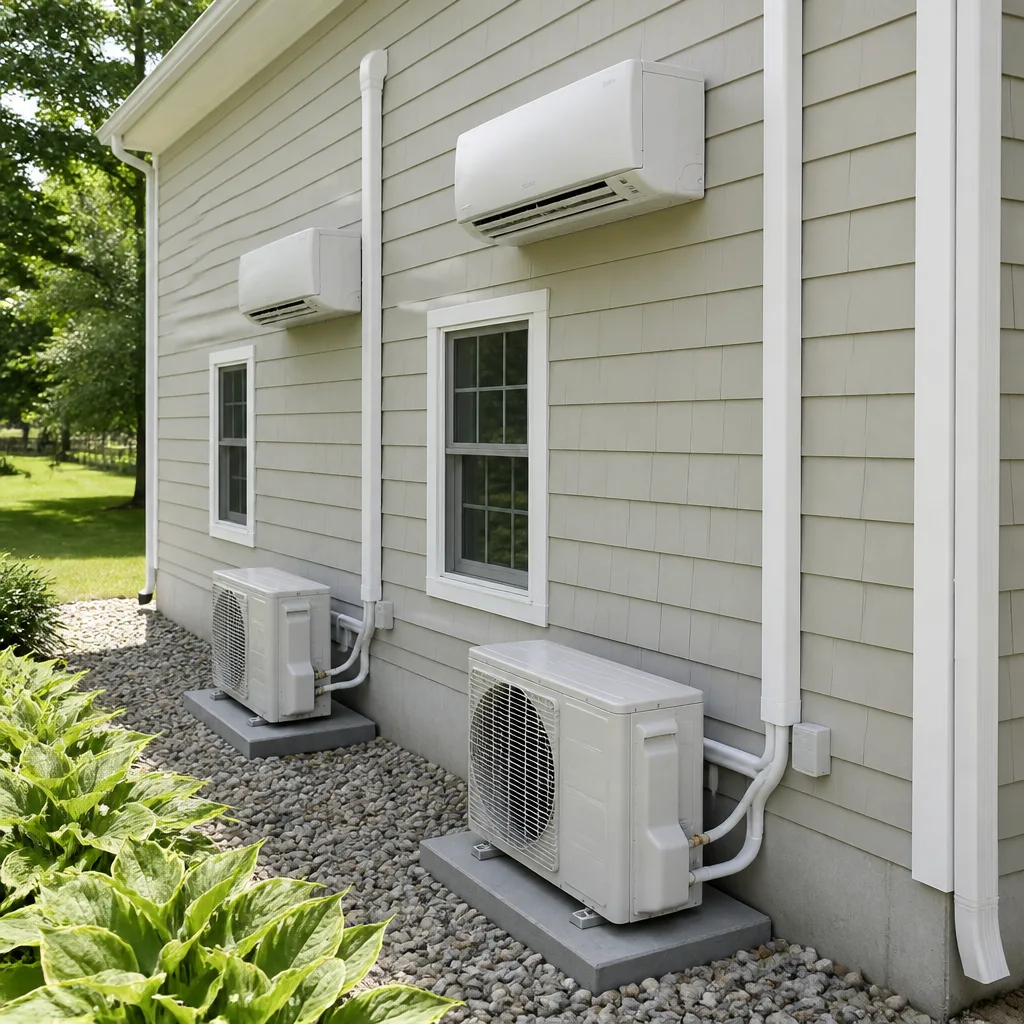 Ductless mini splits
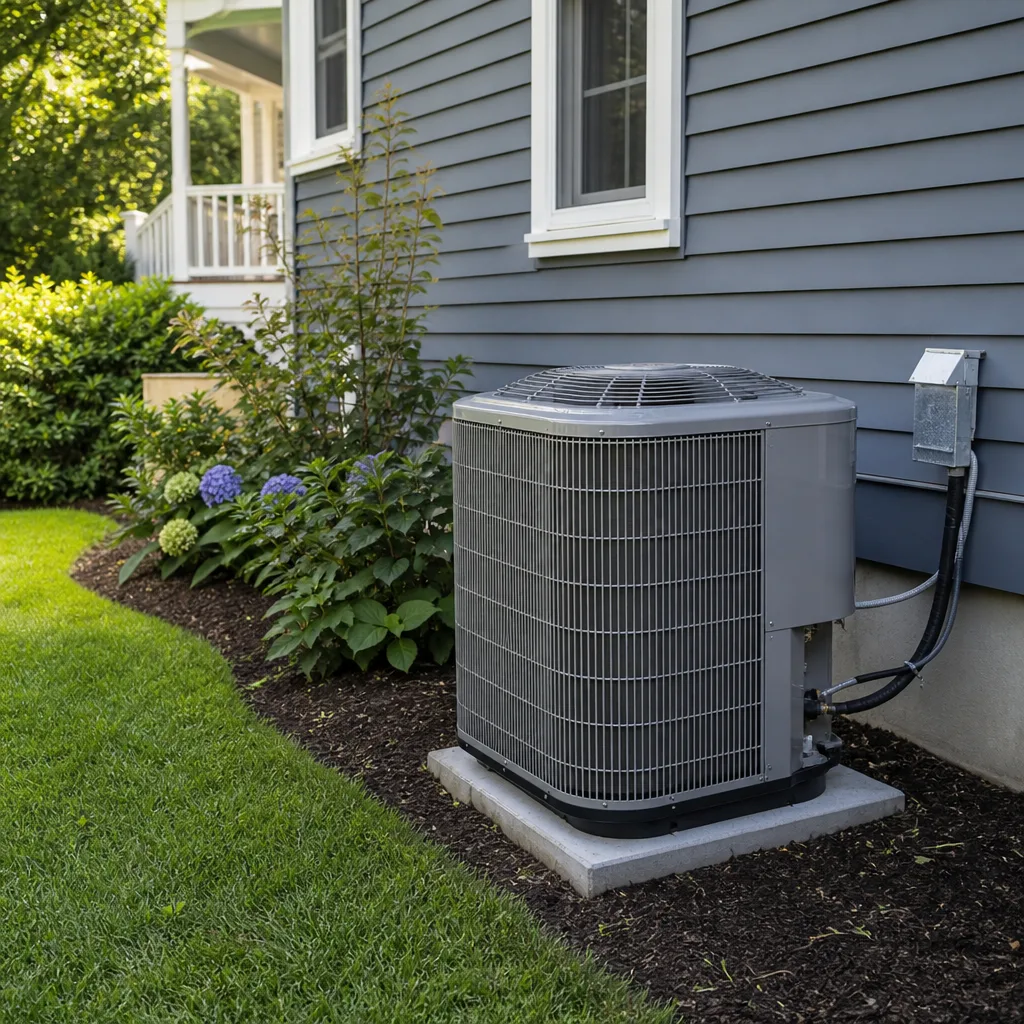 Carrier
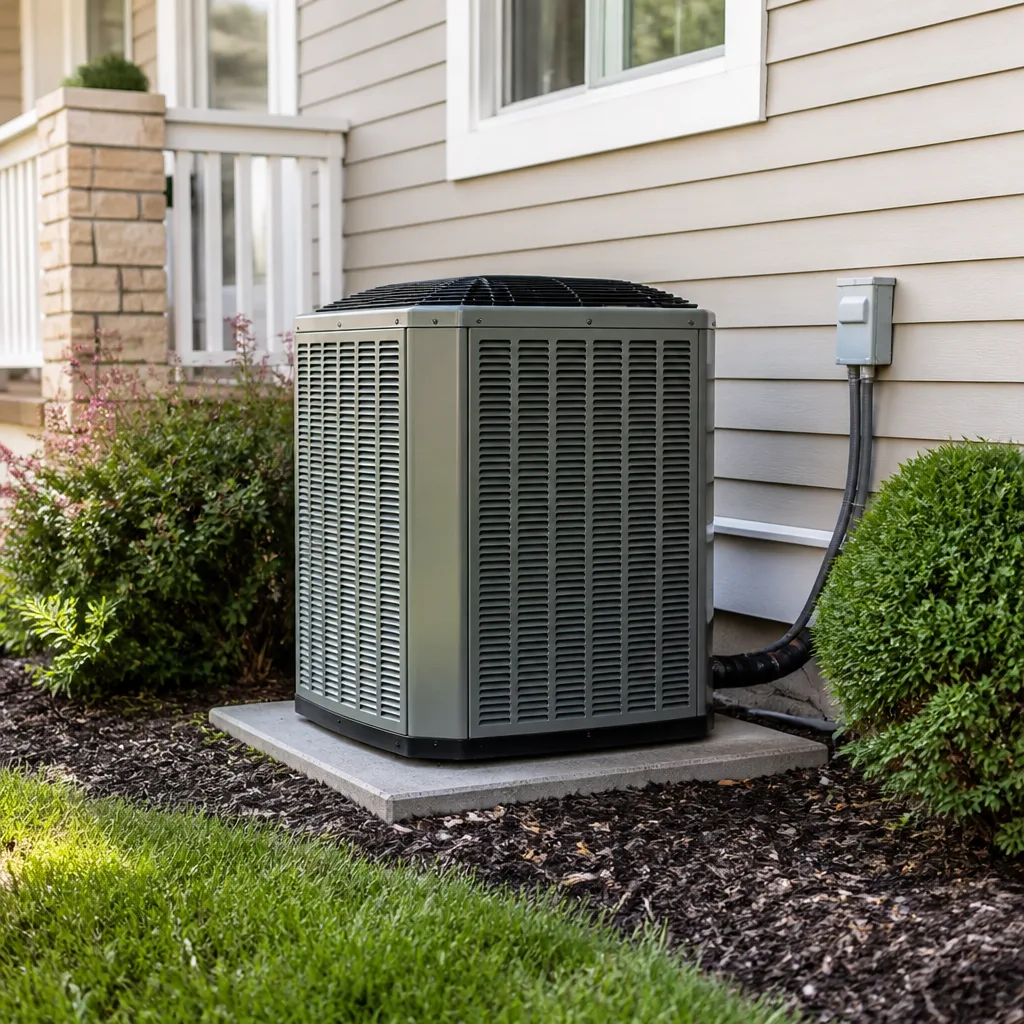 Trane
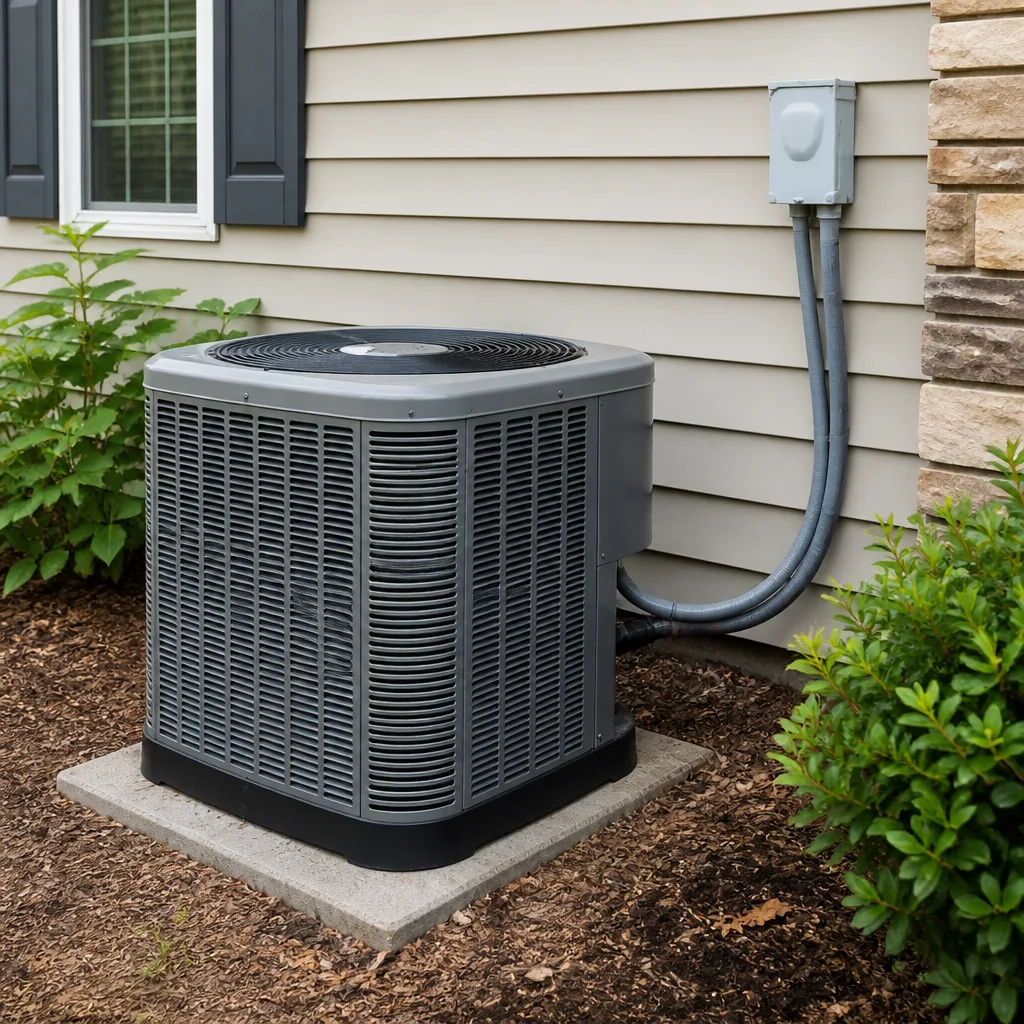 Goodman
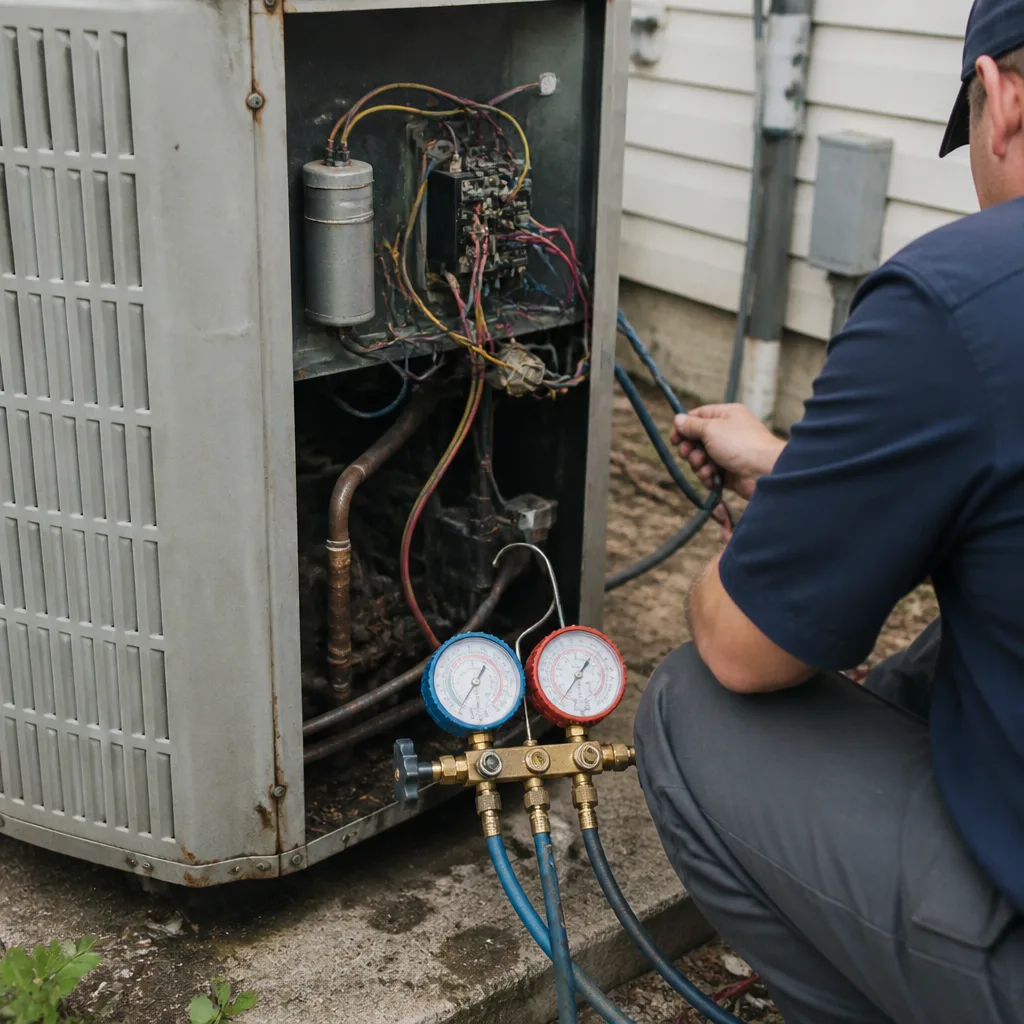
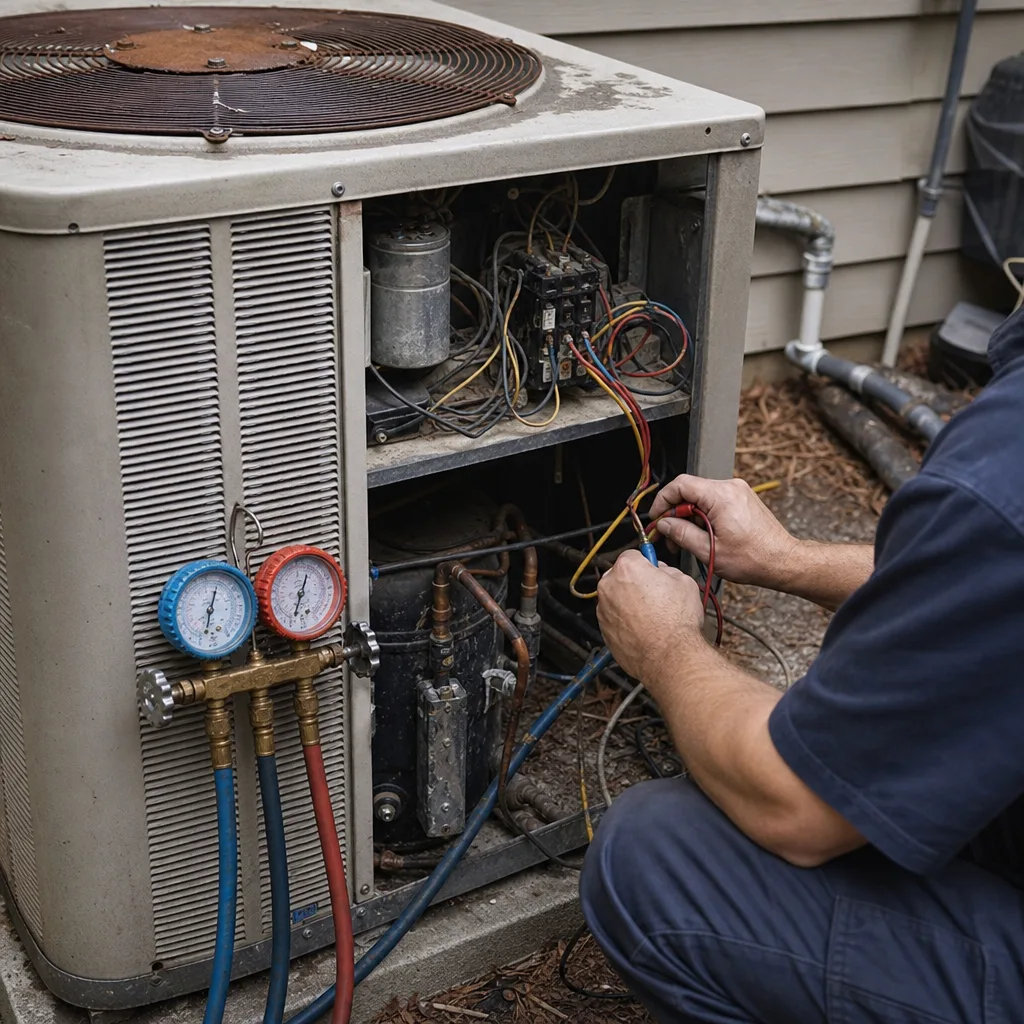
Seasonal tune-up and full diagnostic on your Carrier, Trane, or Goodman system - readings shown to you before any repair is proposed
Diagnosis first, numbers second - you approve the repair price before a single part goes in.
Get your free estimateSeasonal HVAC Care for The Woodlands: Year-Round Homeowner’s Guide
If you’re scheduling your “spring AC tune-up” in May, you’re already late. The Woodlands cooling season is in full swing by late April, and that’s the worst possible moment to discover a refrigerant leak or a capacitor that’s about to fail. Most seasonal HVAC advice is written for climates with four equal seasons and a long, cold winter that forces equipment to cycle year-round. The Woodlands doesn’t work that way. You get roughly seven months of serious cooling demand, a short but genuine heating stretch, and two narrow maintenance windows that most homeowners waste. This guide resets the calendar around what actually happens in The Woodlands and explains what to check, when, and why.
Quick Answer
Seasonal HVAC care in The Woodlands should follow the local climate, not a generic national schedule: prep your cooling system in February and March before the first sustained heat, check your heating system in October after months of dormancy, address pollen fouling on outdoor coils during the February – April oak and pine season, and watch runtime patterns during the July – September peak to catch problems early. Two tune-ups a year, timed to the local shoulder months, prevent most of the failures we see.
Styles & brands we work with
- AC repair
- Furnace & heating
- Heat pumps
- Ductless mini splits
- Carrier
- Trane
- Goodman
Table of Contents
- Why The Woodlands Needs Its Own HVAC Calendar
- The Correct Local Maintenance Calendar
- Oak and Pine Pollen: What It Does to Your Coils and Filters
- Hurricane Season HVAC Protocol
- Winter Heating Reality Check: The Cost of Dormancy
- Reading Your Summer Runtime Patterns
- Brand-Agnostic Care for the System You Already Own
- Common Mistakes to Avoid
- When to Call a Professional
- Frequently Asked Questions
Why The Woodlands Needs Its Own HVAC Calendar
Most maintenance guides you’ll find online were written for a climate with a balanced year, where the furnace and the air conditioner each carry half the load. The Woodlands doesn’t split that way. Cooling here runs from roughly April through October, and the stretch from June to September is unrelenting. Heating shows up in short, sharp spells during December and January, then disappears. That imbalance matters because heating and cooling equipment fail differently depending on whether they run constantly or sit idle for months.
A system that runs hard all summer wears on its compressor, capacitors, contactors, and blower motor. A system that sits unused for seven or eight months develops its own set of problems: dust and debris settle in the burners, seals dry out, and small issues go unnoticed until the first cold snap. Generic advice tells you to “tune up in spring and fall,” which sounds reasonable until you realize that in The Woodlands, “spring” for HVAC purposes means February and March, not April and May. By the time the live oaks have dropped their leaves and the pines have released their pollen, your cooling season has already started.
That’s why the maintenance windows here are narrower than homeowners expect. Miss the February – March window and you’re doing cooling-system prep in the middle of peak demand, when a failing part is hardest to catch before it strands you. Miss the October window and your heating system goes into its first cold snap untested. Neither mistake is catastrophic on its own, but together they’re the reason so many local systems fail at the worst possible time.
The good news: once you realign your calendar, seasonal care gets simpler, not harder. You’re not doing more maintenance than a northern homeowner. You’re doing it at the right time.
The Correct Local Maintenance Calendar
Here’s the calendar we recommend for homes across The Woodlands, from Sterling Ridge and Alden Bridge to Grogan’s Mill and College Park. Two tune-ups a year, timed around the shoulder months, cover nearly everything.
- February: Change the air filter. Walk the outdoor unit and clear any leaves or debris from the cabinet and the pad. Schedule your pre-season cooling tune-up before the February – April pollen wave hits.
- March: The cooling tune-up should happen this month, before the first sustained 85-degree days. A technician checks refrigerant charge, capacitors, contactors, the condensate drain, and the outdoor coil. This is the window where small problems are cheapest to fix.
- April – May: Rinse the outdoor coil (carefully, with the power off) or have it cleaned once pollen season ends. Watch filter loading closely during this stretch and change it more often than your usual interval.
- June – September: Peak cooling season. Change filters on schedule, keep the outdoor unit clear, and note how often the system runs (more on this below). Don’t schedule non-urgent work now if you can help it.
- October: The heating system check. This is the crucial local window because your furnace has likely been dormant for seven or more months. The technician checks burners, igniter, flame sensor, draft and venting, and blower operation.
- November: Test the heat before you actually need it. Run the system for a full cycle on a cool day and confirm it heats, then note any odd smells, sounds, or slow warm-up.
- December – January: Heating season. Keep filters clean, watch for short-cycling, and call promptly if you smell gas or see any unusual behavior (see the safety note below).
- June 1: Hurricane season begins. See the dedicated section below for the pre-storm and post-storm protocol.
That’s the core rhythm. If you only do two things all year, do the March cooling tune-up and the October heating check. Everything else is upkeep around those two anchors.
Oak and Pine Pollen: What It Does to Your Coils and Filters
The Woodlands sits under a heavy tree canopy, and the two dominant species create a maintenance problem most guides ignore. Live oaks release pollen in late February and March. Pines follow in March and April. That timing overlaps almost exactly with the pre-season window for cooling maintenance, which means a system that just got tuned up in early March can be fouled by mid-April if you don’t respond.
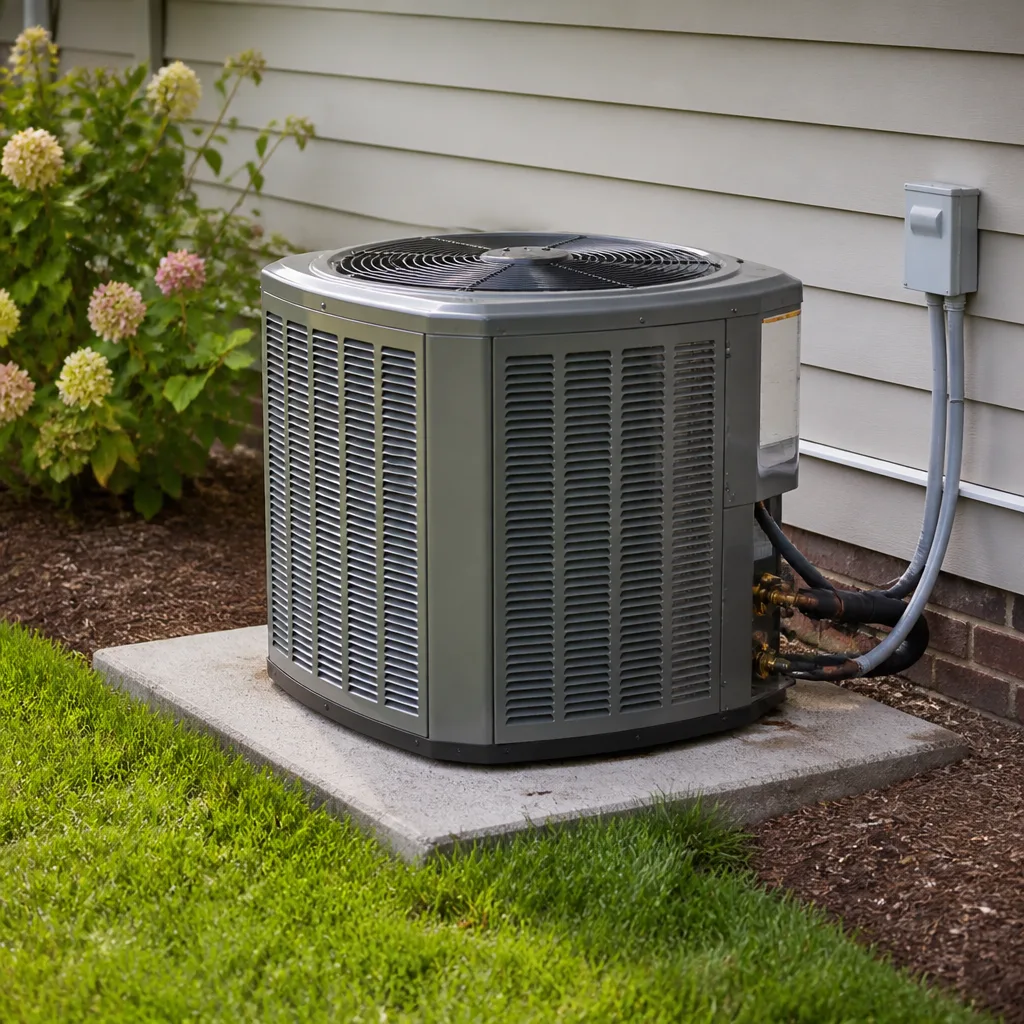
Here’s what actually happens to the equipment. The outdoor condenser coil is a dense fin-and-tube assembly, and pollen is sticky enough to cling to the fins rather than blow through. A coated coil can’t reject heat efficiently, which drives up head pressure and forces the compressor to work harder for the same cooling. Indoors, your return-air filter loads faster during pollen season than at any other time of year, and a clogged filter restricts airflow across the indoor coil, which can lead to frozen coils and reduced capacity.
Our maintenance recommendation for this stretch:
- Filter interval: During February through April, check your filter every two to three weeks rather than every three months. Replace it when it’s visibly grayed or matted; don’t wait for the calendar.
- MERV rating: A MERV 8 to MERV 11 filter is the sweet spot for most The Woodlands homes. Higher-MERV filters (MERV 13 and up) capture more pollen but restrict airflow more, and if your ductwork wasn’t sized for them, the restriction can cost you more cooling than the extra filtration is worth. Ask before you upgrade.
- Outdoor coil: Once pine pollen has finished releasing (typically mid-to-late April), have the coil rinsed or cleaned. Don’t hose it yourself while the power is on, and don’t use a high-pressure spray that can bend the fins.
- Return grilles: Vacuum the return grilles and the area around them during pollen season. Loose dust and pollen around the grille get drawn in and shorten filter life.
If you notice pollen coating on your car in the morning, your outdoor coil is collecting it too. The response is the same: filter attention now, coil cleaning after the season ends.
Hurricane Season HVAC Protocol
Hurricane season runs June 1 through November 30, and the HVAC system is one of the parts of a home most often overlooked in storm prep. There are two distinct phases: what to do before a storm arrives and what to check after it passes.
Before the storm
- Turn the system off at the thermostat and, if you can safely reach it, at the outdoor disconnect. An outdoor unit that’s still powered when the grid flickers can be damaged by surges.
- Secure or remove anything loose near the outdoor unit. Patio furniture, loose fence panels, and yard debris can become projectiles and damage the coil or the cabinet.
- Consider strapping or anchoring the outdoor unit if it isn’t already. In high wind, an unanchored condenser can shift and tear the refrigerant lines, which is a much bigger repair than the strap would have been.
- Note the current condition of the equipment, with photos if you can. If a storm does damage the system, the “before” condition helps with any insurance conversation.
- Set the thermostat off and leave it off until power has been restored and stable for a while.
After the storm
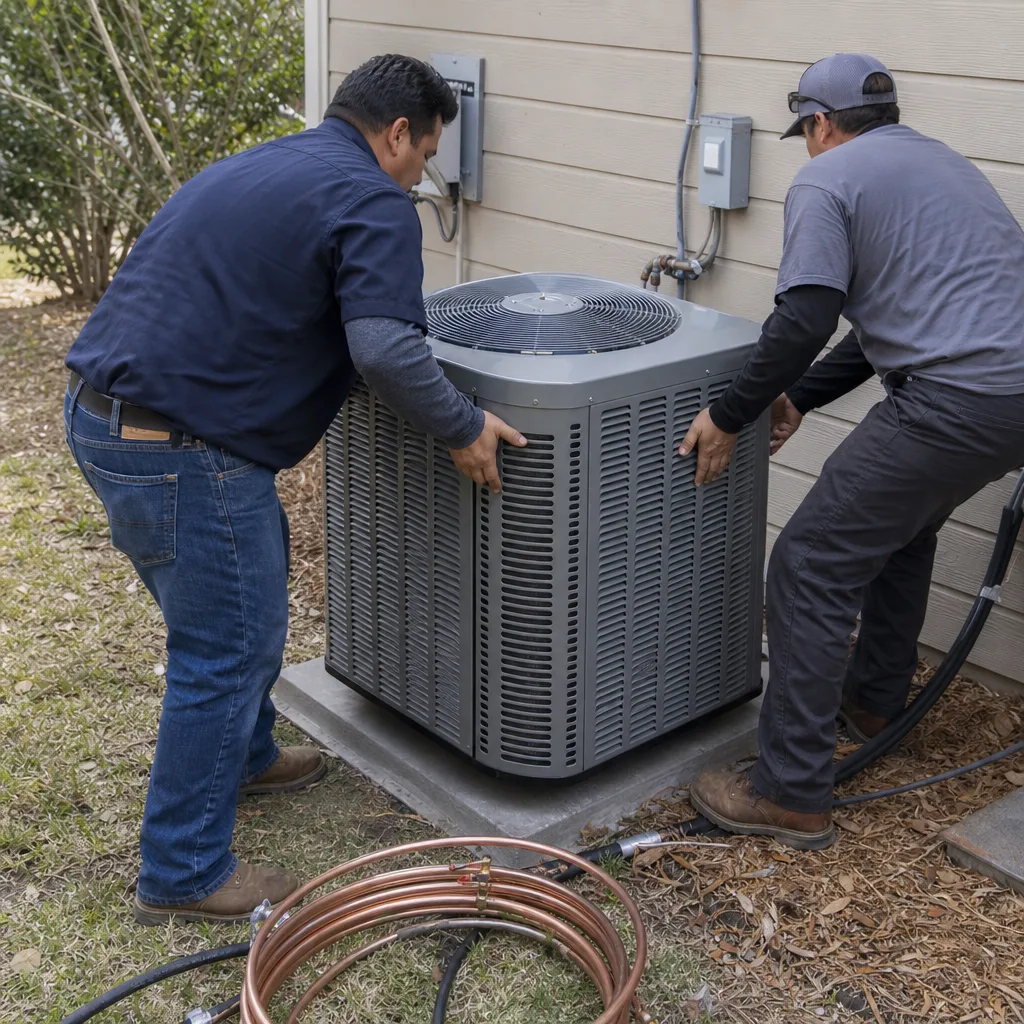
- Check the outdoor unit for visible damage: bent fins, a displaced cabinet, standing water around the pad, or debris lodged in the fan.
- Look for any signs of water intrusion around the indoor air handler, the condensate line, or the electrical connections.
- Don’t power the system back on if you see physical damage, standing water in the electrical compartment, or burn marks. Call a technician first.
- If the system appears intact, restore power and run it for a full cycle while you’re home to observe. Watch for unusual sounds or slow cooling.
On the insurance question: storm-damaged HVAC equipment is often covered under a homeowners policy, but the specifics depend on your policy and how the damage occurred (wind-driven damage versus flood versus power surge). We can work with your insurer and document what we find, but the coverage decision is theirs. Request a thorough inspection and a written summary of visible damage so you have clean records.
Winter Heating Reality Check: The Cost of Dormancy
Here’s a fact about The Woodlands that catches transplants off guard: your heating system may sit completely unused for seven or eight months at a stretch. That’s not a problem in a climate where the furnace runs every week. It’s a real problem here, because long dormancy produces its own failure patterns.
What goes wrong after months of sitting idle:
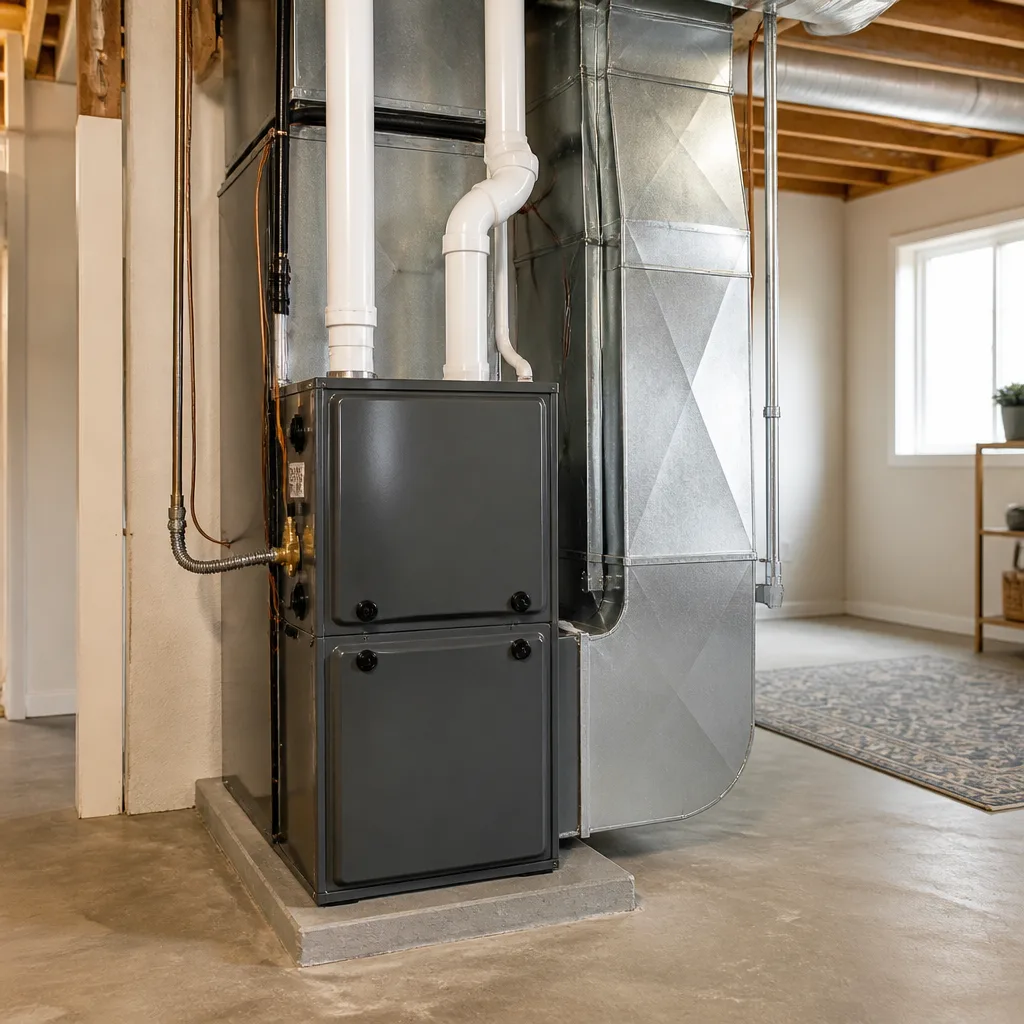
- Dust and debris in the burners: Accumulated dust can cause uneven flames, delayed ignition, or a furnace that won’t light at all on the first cold night.
- Corroded or dirty flame sensors: The flame sensor tells the furnace the burner is lit. When it’s contaminated, the furnace ignites briefly and shuts off, then repeats. This is one of the most common early-season furnace failures.
- Seized blower motors: Bearings and motor shafts that haven’t turned in months can stiffen or seize.
- Dried-out gaskets and seals: Rubber and foam gaskets in the cabinet and venting can dry and degrade without cycling to keep them supple.
- Pilot or ignition issues: Igniters and pilot assemblies that haven’t fired since January are more likely to fail on the first call of the season.
- Venting obstructions: Birds, insects, and yard debris find their way into flue terminations during the warm months.
This is exactly why the October heating check is not optional in The Woodlands. It catches dormancy-related problems while the weather is still mild and a repair can be scheduled on your terms. The first cold snap of December is a bad time to learn your furnace won’t light.
One safety note: if you ever smell gas, hear a persistent clicking near the furnace that doesn’t result in ignition, or see soot or scorch marks around the unit, stop and call a professional. Gas and combustion equipment requires trained hands; don’t attempt to disassemble or service the burners or venting yourself. We work on the heating side with the same repair-first approach we bring to cooling, and where gas safety is concerned, we never talk a homeowner through a DIY fix.
Reading Your Summer Runtime Patterns
During peak season, the most useful diagnostic you have doesn’t require a tool. It’s your system’s runtime pattern. You live with it every day, and small changes are often the first sign of trouble.
A healthy cooling system in The Woodlands should run in long, steady cycles during the hottest part of the day, then rest. What’s worth watching for:
- Short cycling: The system turns on and off in short bursts, cycling frequently. This can signal a refrigerant charge problem, an oversized system, a failing capacitor, or a thermostat issue. It’s also harder on the compressor than steady running.
- Running nonstop without cooling well: If the system never shuts off but the house stays warm, you may have a refrigerant leak, a dirty coil, restricted airflow from a clogged filter, or a failing compressor. This deserves a call soon, not “wait and see.”
- Longer runtimes than last summer: Every summer is a little different, but if the house takes noticeably longer to cool than it did a year ago, something has degraded. Filter, coil cleanliness, and charge are the first suspects.
- Ice on the indoor coil or the refrigerant line: That’s a sign of restricted airflow or low refrigerant. Shut the system off and call a technician; running it with a frozen coil can damage the compressor.
- Warm air from some vents but not others: This points to duct problems or a failing zone damper, not necessarily the outdoor unit.
If you catch a pattern early, you’re often looking at a small repair instead of a compressor replacement. That’s the entire point of paying attention during peak season rather than waiting for something to break.
Brand-Agnostic Care for the System You Already Own
Most seasonal advice assumes you’ll call whoever installed your system, or the manufacturer’s preferred dealer. That works if your installer is available and honest. It doesn’t work if you’ve been told you need a replacement when a repair would do.
We take a different approach. Our technicians are factory-trained or experienced across nine of the most widely installed residential brands, including Carrier, Trane, Lennox, and American Standard, along with Goodman, Rheem, York, Daikin, and Bryant. That means that during a February tune-up or a July breakdown, nobody is guessing at your equipment because it’s unfamiliar. And because we’re not tied to any one manufacturer, the recommendation is based on what your system actually needs, not on what we’d rather sell.
If your The Woodlands home runs a Carrier system installed a decade ago, or a Trane system in a newer build in Creekside Park, the tune-up calendar doesn’t change much between them. What changes is the specific wear points the technician looks at and the parts they recommend. We work on your system, not against it, and our three-service menu (AC repair, AC installation, and furnace repair) means cooling and heating live under one roof, so you’re not juggling two contractors through the year.
When you do need a larger repair or a replacement, it’s worth reading up on AC installation ahead of time so you understand what the estimate should cover. And if your system has been struggling through a The Woodlands summer despite regular care, that’s the point at which a proper load calculation and a written fixed price for replacement makes more sense than another patch.
Common Mistakes to Avoid
- Scheduling the cooling tune-up in May. By May, The Woodlands cooling season is already well underway and scheduling is at its most constrained. Move it to February or March and you’ll find problems before they become emergencies.
- Running a high-MERV filter in ductwork that wasn’t designed for it. MERV 13 and up can choke airflow in older The Woodlands homes with smaller returns. If the system feels weak after a filter upgrade, the filter is often the cause, not the equipment.
- Ignoring the heating system until December. A furnace that’s sat unused for seven months has specific failure modes that show up on the first cold night. The October check exists to catch them while it’s easy.
- Skipping the pre-storm shutdown. An outdoor unit that stays powered through a grid flicker can take a surge it wouldn’t otherwise. Turning the system off and securing loose items before a storm is a five-minute job that saves bigger ones.
- Washing the outdoor coil with a pressure washer. Pollen season invites a quick hose-down, and high pressure bends the fins and can drive debris deeper. Rinse gently, and only after pollen season ends.
- Treating short cycling as normal. In The Woodlands summers, short cycling gets dismissed as “just how it runs in the heat.” In reality, it’s a signal worth a diagnostic.
- Waiting for a failure during a heat wave. A system that’s struggling in July is in the worst possible state to be diagnosed and repaired. If your runtime pattern has changed, call before peak demand makes everything harder.
When to Call a Professional
Some issues are fine to note and watch. Others need a technician. Call us when the system short-cycles, runs nonstop without cooling well, blows warm air, ices up, smells like gas or something burning, or shows a runtime pattern that has clearly changed since last summer. Call after a storm if you see physical damage, standing water near electrical components, or the system won’t start. And call in October if your heating system hasn’t been checked since last season; catching dormancy-related failures early is the whole reason for the calendar.
Wexford AC Repair offers free estimates in The Woodlands. We answer 24/7, with fast dispatch from 7am to 7pm, Sunday through Friday. Call (866) 834-7590.
Frequently Asked Questions
Twice a year, timed to the local shoulder months: once in February or March for the cooling system and once in October for the heating system. That schedule fits The Woodlands’ seven-month cooling season and the long dormancy period that precedes each heating season, and it keeps the two tune-ups from landing during peak demand.
February or March, before the first sustained heat and before the oak and pine pollen wave. Scheduling in May, when many homeowners follow generic “spring” advice, puts you in peak-season scheduling and misses the window to catch leaks and failing parts before the cooling season is in full swing.
Pollen coats the outdoor condenser coil, which reduces heat rejection and forces the compressor to work harder, while also loading your indoor air filter faster than at any other time of year. The response is to check the filter every two to three weeks during February through April and have the outdoor coil cleaned once pollen season ends.
Watch for short cycling, nonstop running without good cooling, noticeably longer runtimes than last summer, ice on the indoor coil, or uneven cooling across rooms. Any of these can indicate a refrigerant, airflow, or component problem and deserve a diagnostic before it turns into a bigger repair.
Turn the system off at the thermostat and the outdoor disconnect, secure loose items near the outdoor unit, consider anchoring the condenser, and photograph the equipment’s condition for your records. After the storm, inspect for damage before restoring power; if you see water in the electrical compartment or physical damage, call a technician first.
Yes, because the long dormant period is exactly what creates the problems. Dust in burners, a dirty flame sensor, a stiff blower motor, and dried-out gaskets all develop from disuse, and an October check catches them while the weather is still mild. Call (866) 834-7590 for a free estimate; we answer 24/7.
The Bottom Line
The Woodlands doesn’t have a four-season HVAC calendar; it has a long cooling season, a short but real heating season, and two narrow maintenance windows that homeowners waste by following advice written for other climates. Move your cooling tune-up to February or March, your heating check to October, respond to the pollen wave with more frequent filter changes and a post-season coil rinse, prep and inspect around hurricanes, and watch your summer runtime for early signals. That’s the whole schedule. If you want help aligning it to your system, Wexford AC Repair is here for AC repair when something fails and for a closer look at care and schedules in The Woodlands. Call (866) 834-7590 for a free estimate. We answer 24/7. Fast dispatch from 7am to 7pm, Sunday through Friday.
Written by the team at Wexford AC Repair.
See the difference
 Before
 After
 Before
 After
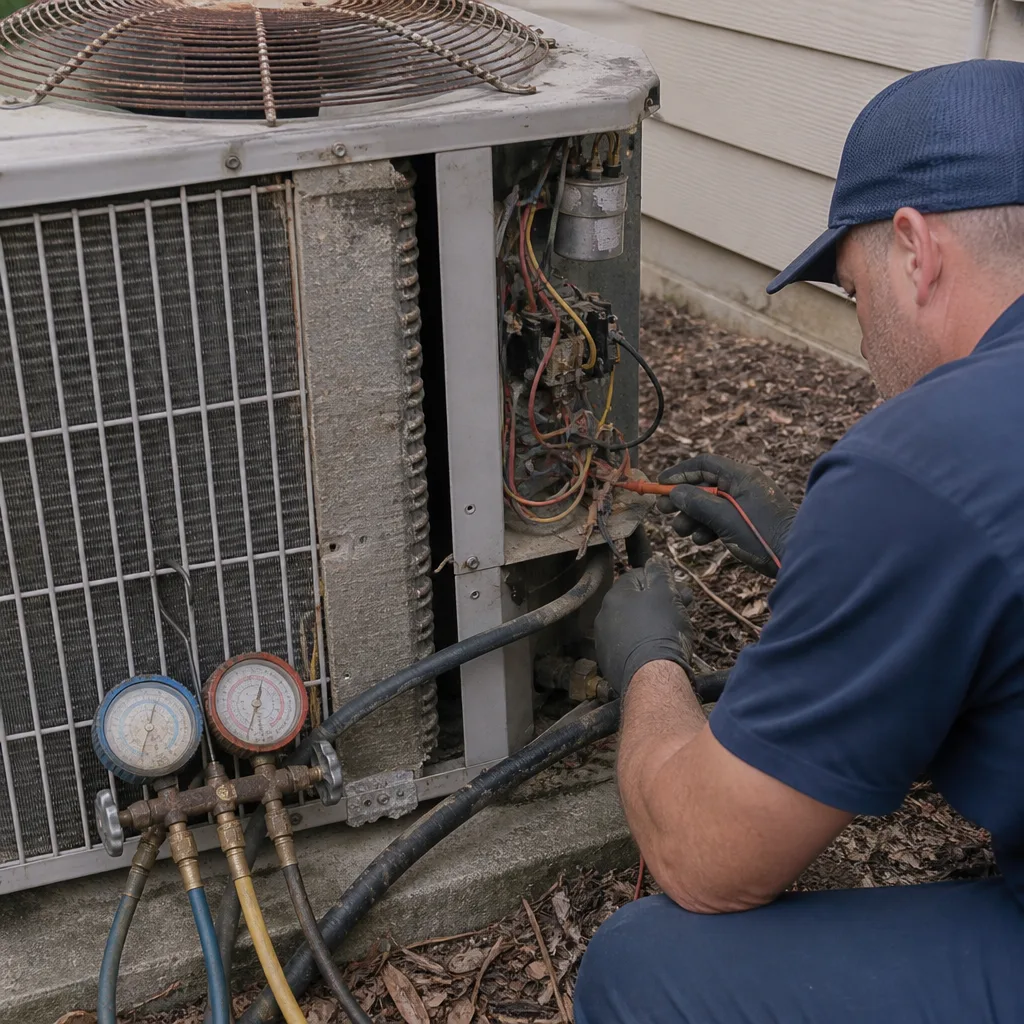 Before
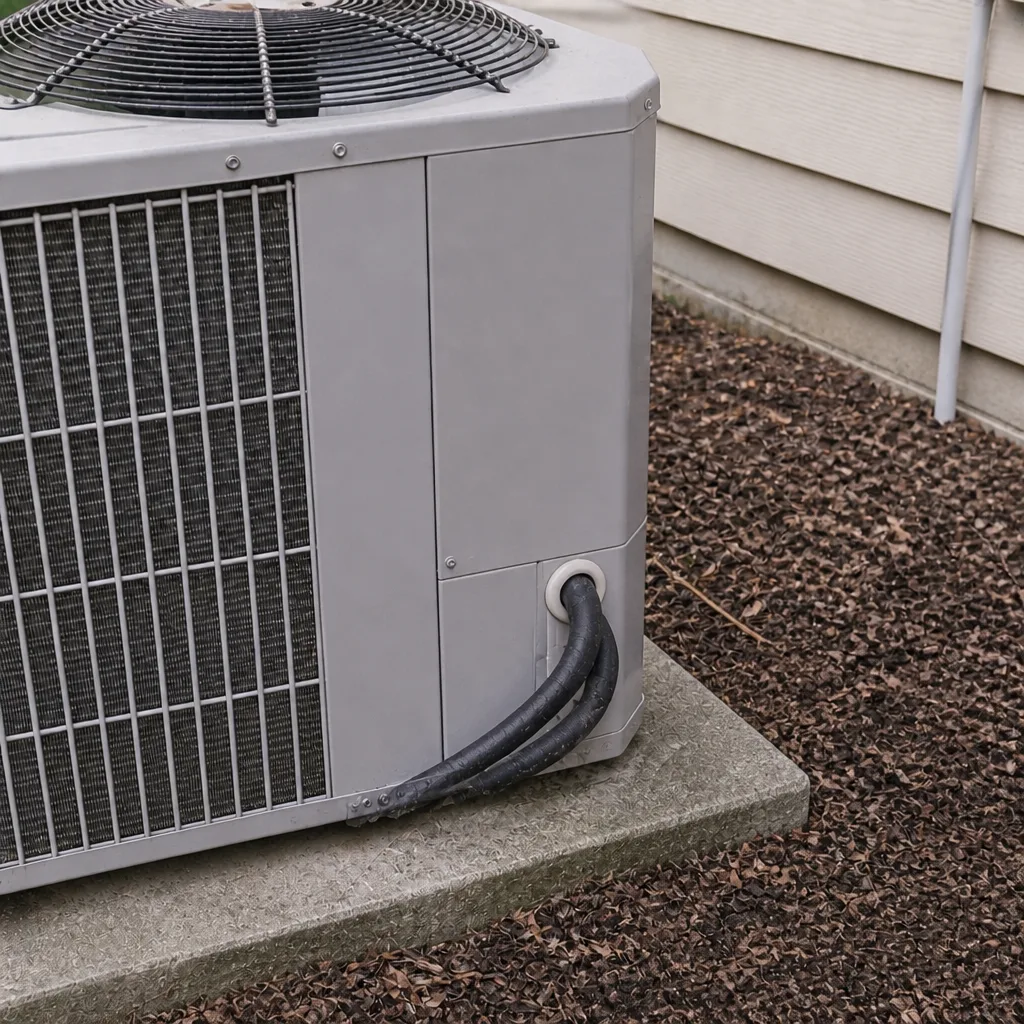 After