
Last updated November 15, 2026
 AC repair
 Furnace & heating
 Heat pumps
 Ductless mini splits
 Carrier
 Trane
 Goodman
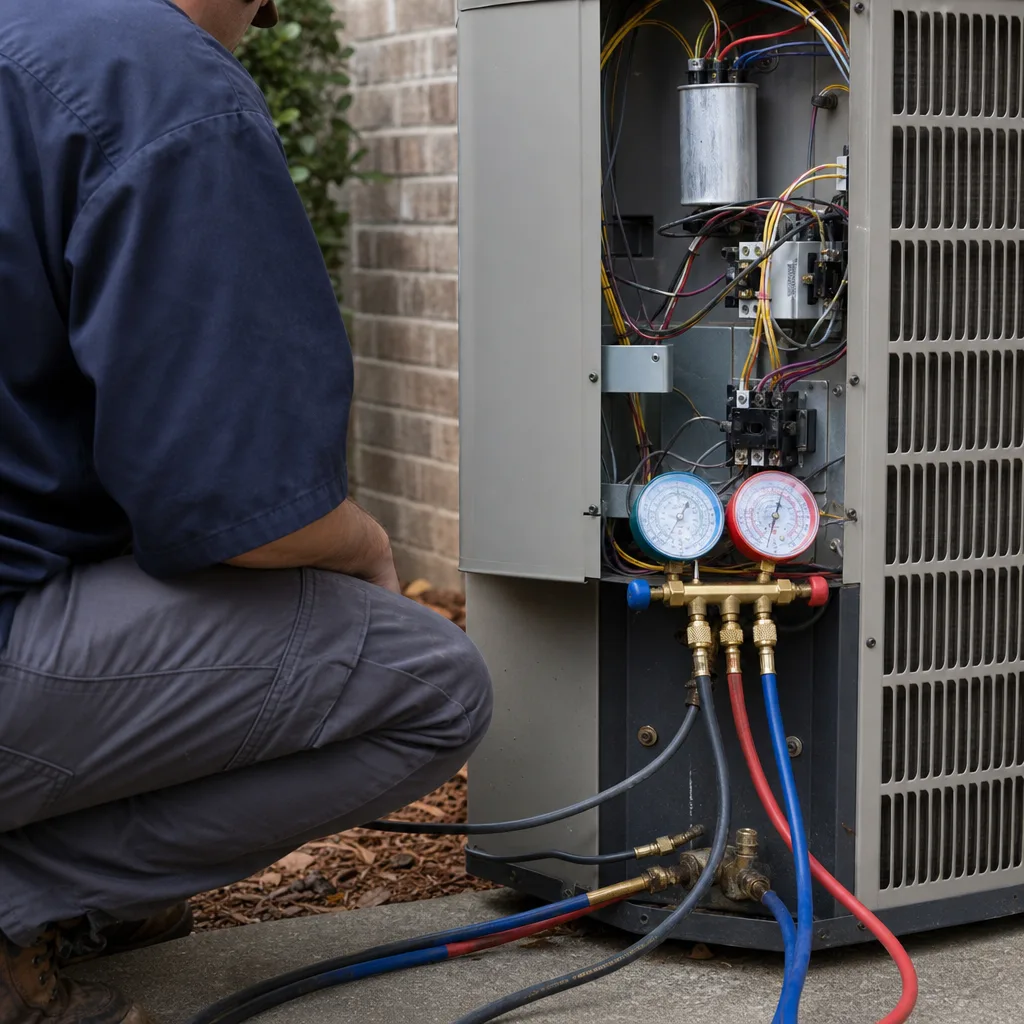
Seasonal tune-up and full diagnostic on your Carrier, Trane, or Goodman system - readings shown to you before any repair is proposed
Diagnosis first, numbers second - you approve the repair price before a single part goes in.
Get your free estimateHVAC Cost Breakdown: The The Woodlands Homeowner’s Reference for 2026
Most HVAC cost guides give you a national number and send you on your way. That’s not useful when you live in a high-usage climate, a milder but humid one where the equipment in your house runs longer each year than the same unit would in a drier, cooler market. The consequence is simple: parts wear out sooner, refrigerant leaks surface earlier, and the usual ten-year replacement rule can arrive at year eight. This guide gives you real 2026 price ranges for the repairs that actually happen in The Woodlands, the math behind whether to repair or replace, and the costs most quotes leave off. You’ll finish knowing what you should pay, why quotes vary, and when a technician is being honest with you.
Quick Answer
In The Woodlands, expect to pay roughly $250 to $650 for a capacitor or blower motor repair, $350 to $800 for a refrigerant recharge depending on the leak, and $1,200 to $2,400 for a compressor replacement on most residential systems. Replacement of a typical split system runs from $6,500 to $13,000 installed, so the repair-versus-replace question usually comes down to system age, efficiency rating, and whether the repair cost crosses about 40% of the replacement quote.
Styles & brands we work with
- AC repair
- Furnace & heating
- Heat pumps
- Ductless mini splits
- Carrier
- Trane
- Goodman
Table of Contents
- Why The Woodlands Systems Wear Faster Than the Label Says
- 2026 Repair Prices for the Jobs We See Most
- The Repair-vs-Replace Formula Using Local Numbers
- Why the Same Job Quotes $200-$400 Apart
- Hidden Costs Most HVAC Quotes Omit
- How Equipment Brand Changes Parts Cost and Lead Time
- How to Read a 2026 HVAC Quote Correctly
- When to Call a Professional
Why The Woodlands Systems Wear Faster Than the Label Says
Manufacturers rate equipment in running hours, not calendar years. A condenser labeled for fifteen years of service assumes a moderate climate with a limited cooling season. In The Woodlands, an average summer pushes an air conditioner to run from March into October, often at near-continuous duty on the hottest weeks. That extra runtime translates to more compressor cycles, more fan bearing wear, more refrigerant pressure swings, and longer hours of moisture exposure on coils and drain pans. A unit that would hit the end of its design life in twelve years in a cooler climate can arrive at that same wear state in eight or nine.
That doesn’t mean the nameplate is lying. It means you should measure system health in runtime, not in a promise on the box. Our technicians have up to 11 years of experience across The Woodlands and the surrounding market, and a recurring pattern shows up: homeowners surprised that a “ten-year” system needs a compressor at year eight. It isn’t a defect. It’s the climate doing what climates do.
What this changes for you practically:
- Replace-time math should anchor on total runtime, not the installation date.
- A pre-season tune-up buys more in The Woodlands than in a market with a short cooling season, because you’re catching wear before it turns into a compressor.
- Repair decisions made at year eight should weigh remaining hours, not remaining months.
- Systems that pull double duty (cooling and heating from the same heat pump or packaged unit) accumulate wear on both cycles, so their clocks run faster still.
If you’re already seeing repeat repairs on the same system, read through our AC repair page for how we narrow down a problem before parts get replaced. Fast diagnosis matters more than speed alone.
2026 Repair Prices for the Jobs We See Most
The table below reflects typical 2026 price ranges for the most common residential HVAC repairs in The Woodlands. These are estimates, not quotes. The written estimate you receive after diagnosis is the price that applies to your job.
| Repair | Typical 2026 Range | Notes |
|---|---|---|
| Capacitor replacement | $250 – $450 | Fast job; part cost is small, the visit drives the number. |
| Contactor replacement | $250 – $500 | Often paired with a capacitor on the same visit. |
| Blower motor replacement | $450 – $950 | Higher when variable-speed or ECM motors are involved. |
| Refrigerant recharge (R-410A) | $350 – $800 | Price sits at the leak side of the range; a slow leak needs repair, not just a fill. |
| Refrigerant recharge (R-22 legacy) | $700 – $1,400+ | Older systems only; cost reflects the shrinking supply of legacy refrigerant. |
| Evaporator or condenser coil cleaning | $300 – $600 | Higher when the coil is deep in a cabinet or attic install. |
| Evaporator coil replacement | $1,100 – $2,200 | Case-specific; often near the repair-replace line on older units. |
| Compressor replacement | $1,200 – $2,400 | Warranty may cover the part; labor is the swing factor. |
| Drain line clearing | $200 – $350 | Common in humid months; often avoided by a routine flush. |
| Full system replacement (split) | $6,500 – $13,000 | Size, efficiency tier, and duct work drive the range. |
Two honest notes on this table. First, capacitor and contactor failures are so common that a service visit which turns out to be one of those is a good outcome; they’re inexpensive, quick, and they can look like a dead compressor until the meter comes out. Second, a refrigerant recharge is only a repair when the leak has been fixed. Adding refrigerant to a system with a known leak works until it doesn’t, and the cost of repeated recharges adds up faster than the actual repair.
What’s Actually Driving Those Numbers
Parts pricing on HVAC has shifted in the last few years as refrigerant regulations and manufacturing consolidations have reshaped the supply chain. R-410A sits at higher price points than it did a few years ago, R-22 is now a specialty item, and electronic motor controls (variable-speed blowers) cost multiples of what a standard PSC motor did. Labor rates in The Woodlands sit at the upper end of the Texas market, reflecting the density of premium housing stock and the complexity of many attic and closet installs.
The Repair-vs-Replace Formula Using Local Numbers
There’s a commonly quoted formula: if the repair costs more than 50% of a new system and the unit is more than ten years old, replace it. That’s fine as a starting point. For The Woodlands’ runtime profile, it needs adjustment.
Here’s the version we use in practice:
- Get the age in runtime terms. If the system is more than eight years old and has had two or more repairs in the last two years, treat it as ten-plus for decision purposes.
- Get the repair quote in writing. Refrigerant-only repairs don’t count the same way as a compressor or coil.
- Divide repair cost by replacement cost. If the repair is under 30% of a replacement quote, repair is usually the right call.
- If the repair is 40% or more, look hard at replacement. At this point the repair buys you a temporary fix on a system whose clock is running fast.
- Above 50%, replacement almost always wins. Even a repaired compressor on an eight-year-old system in this climate buys you a window of time, not a second life.
- Adjust for efficiency. A 10-SEER legacy unit against a new 16-SEER system has a payback argument purely on runtime energy cost, before you factor in the repair.
That last point matters more in The Woodlands than in most markets. A low-efficiency system running eight months per year costs more per year than the same system in a shorter cooling season. Our AC installation page covers the equipment side; the repair-vs-replace decision is where you decide whether to spend that money now or later.
A Real-World Scenario, Described in General Terms
Take a nine-year-old split system with a failed compressor. The repair quote lands around $1,900. A replacement quote for a similar-capacity system comes in around $9,000. That’s a repair at 21% of replacement, so repair is reasonable if the rest of the system (coil, blower, drain) tests healthy. Now imagine the same system needs both a compressor and an evaporator coil: repair quote climbs to $3,600, or 40% of replacement. At that point you’re patching a component chain, and the replacement conversation becomes the honest one.
Why the Same Job Quotes $200-$400 Apart
Two technicians diagnose the same failed blower motor and quote jobs that differ by $300. Neither is necessarily wrong. Here’s what legitimately sits behind the gap:
- Access difficulty. A blower accessed through a closet door in a ground-floor utility space is a short job. The same motor in a tight attic with limited clearance and humid summer conditions is not. Labor tracks access.
- Parts tier. An OEM motor and a comparable aftermarket motor can differ by $100-$200 in parts cost alone. Both may be acceptable; ask which you’re getting.
- Diagnostic depth. A quote that includes a full electrical check, refrigerant pressure read, and coil inspection takes longer but catches the second problem before it becomes a callback. A quote that swaps the part and leaves is cheaper, until the second problem surfaces two weeks later.
- Insurance, licensing, and administration. A shop running state-licensed, insured technicians with proper refrigerant handling carries real overhead. A premium of $100-$200 that reflects that is a legitimate premium, not padding.
- Warranty policy on labor. Some contractors warranty their labor for 30 days; others for a year. That’s a real cost embedded in the quote.
- Refrigerant handling. R-410A recovery and disposal requires equipment and certification. Shops that economize here cut corners you shouldn’t accept.
When you compare quotes, compare the whole picture: parts tier, warranty, diagnostic scope, and what happens if the repair doesn’t hold. Price alone misleads.
Hidden Costs Most HVAC Quotes Omit
Here’s where a quote that looks like a bargain turns into an unbudgeted second invoice. The costs below appear often enough that you should ask about them at the quote stage.
- Permit fees on replacement. Most The Woodlands-area jurisdictions require a permit for system replacement, and the fee is usually modest but real. Some contractors fold it in; others don’t. Ask.
- Refrigerant recovery and disposal. Legitimate recovery, recycling, and disposal of refrigerant is a line item. It occasionally appears as a surcharge after the fact.
- Crane charges on rooftop or elevated units. Some homes adjacent to commercial-zoned areas of The Woodlands have packaged or rooftop-mounted equipment. A crane is sometimes the only way to move a failed unit out and a new one in, and cranes cost real money that rarely shows in the initial quote.
- Haul-away of the old equipment. Removal and disposal of the old condenser or air handler is sometimes free, sometimes $100-$250. Confirm upfront.
- Duct modifications. A new system with a different cabinet size can need transitions or duct adjustments. These are legitimate and often last-minute.
- Electrical work. A new system pulling more amperage than the old may need a disconnect or circuit upgrade. That’s a separate licensed electrical line item.
- Condensate drain and safety switch upgrades. Required in many installs today and easy to leave off a low quote.
None of these are unusual. What’s unusual is a quote so low it can’t possibly include them. Ask the contractor to state, in writing, whether each of these is included. Honest answers to that question separate real quotes from teaser quotes.
How Equipment Brand Changes Parts Cost and Lead Time
Brand matters less for quality (all nine major residential brands we service, Wexford AC Repair, make reliable equipment at the mid-range and up) and more for parts availability. That distinction is what actually drives your repair timeline and your total cost.
Some brands share platform components across their lineups, so capacitors, contactors, and even some blower motors interchange and sit on local shelves. Others use proprietary boards, variable-speed control modules, and matched-coil assemblies that have to be ordered. A Carrier or American Standard unit rarely stalls on a basic electrical part. A Daikin or Bryant system with a proprietary inverter board can add two to five days to the repair, and that lead time is a real cost if you’re in cooling season.
What to Ask Before You Buy a New System
- How many days does the distributor usually take on the components most likely to fail?
- Which parts of this system are shared platform and which are proprietary?
- What’s the labor warranty period, and who honors it if the contractor is unavailable?
A brand-neutral shop has an edge here. We don’t push a preferred manufacturer, so the parts recommendation is based on what fails and how fast we can source it, not on a distributor relationship. That’s the practical version of brand-agnostic service: the shop has no reason to steer you toward someone else’s inventory.
How to Read a 2026 HVAC Quote Correctly
A quote should tell you what will be done, what part will be used, what’s included, and what’s not. If any of those four is missing, ask. Here’s the checklist we’d want a homeowner to run every quote through.
- Written scope. What’s being replaced, what’s being checked, and what’s being left alone.
- Parts specification. OEM or aftermarket? Model number? A quote that says “compressor” with no further detail isn’t a quote, it’s an estimate of a guess.
- Labor hours and rate. Not always stated, but a legitimate quote can usually provide it.
- Warranty terms. Parts warranty and labor warranty, separately.
- Permits, disposal, and haul-away. Included yes/no for each.
- Expiration. A quote that holds for 30 days is normal. A quote that’s a number on a business card is not a quote.
- Company information. State-licensed, insured, and reachable after the job.
The written estimate sets the price. That’s the line that matters. If a technician can’t produce one before starting work, that’s the moment to pause and call the office.
See the difference
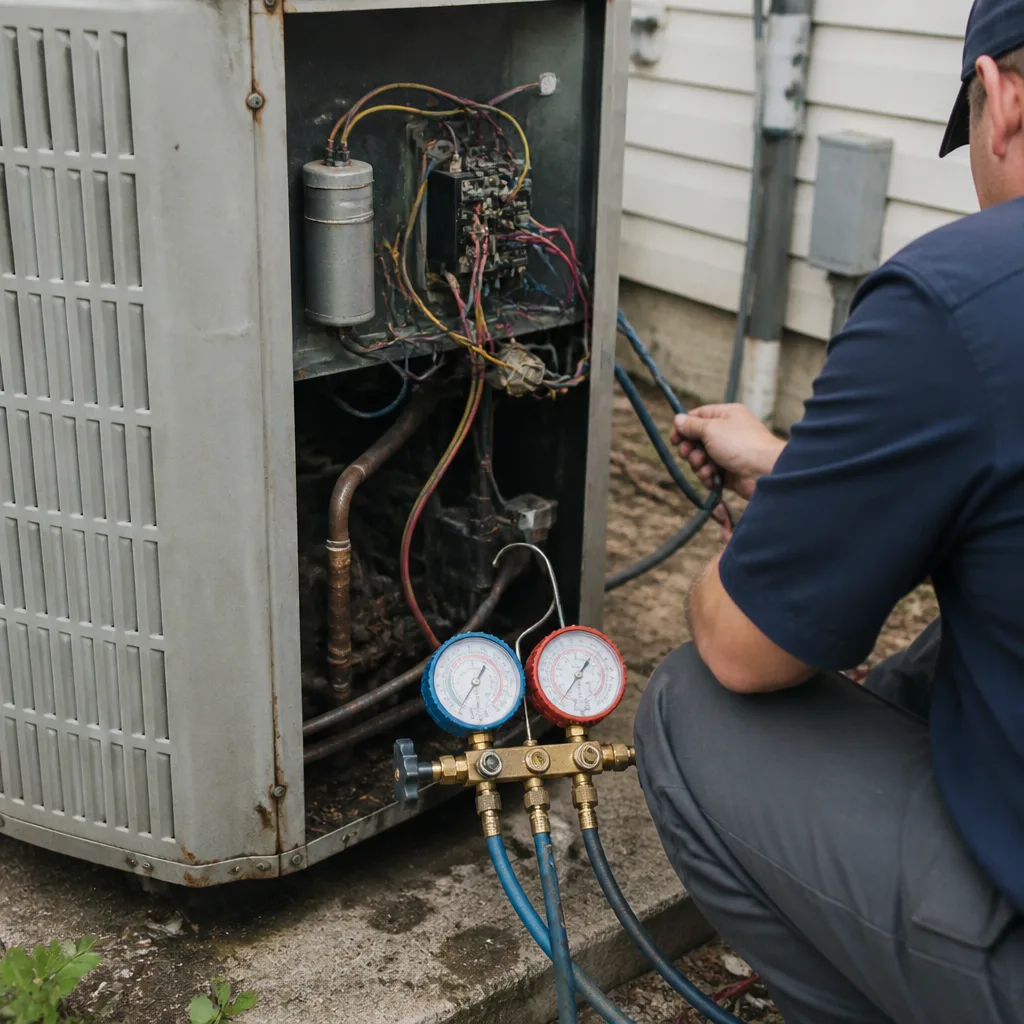 Before
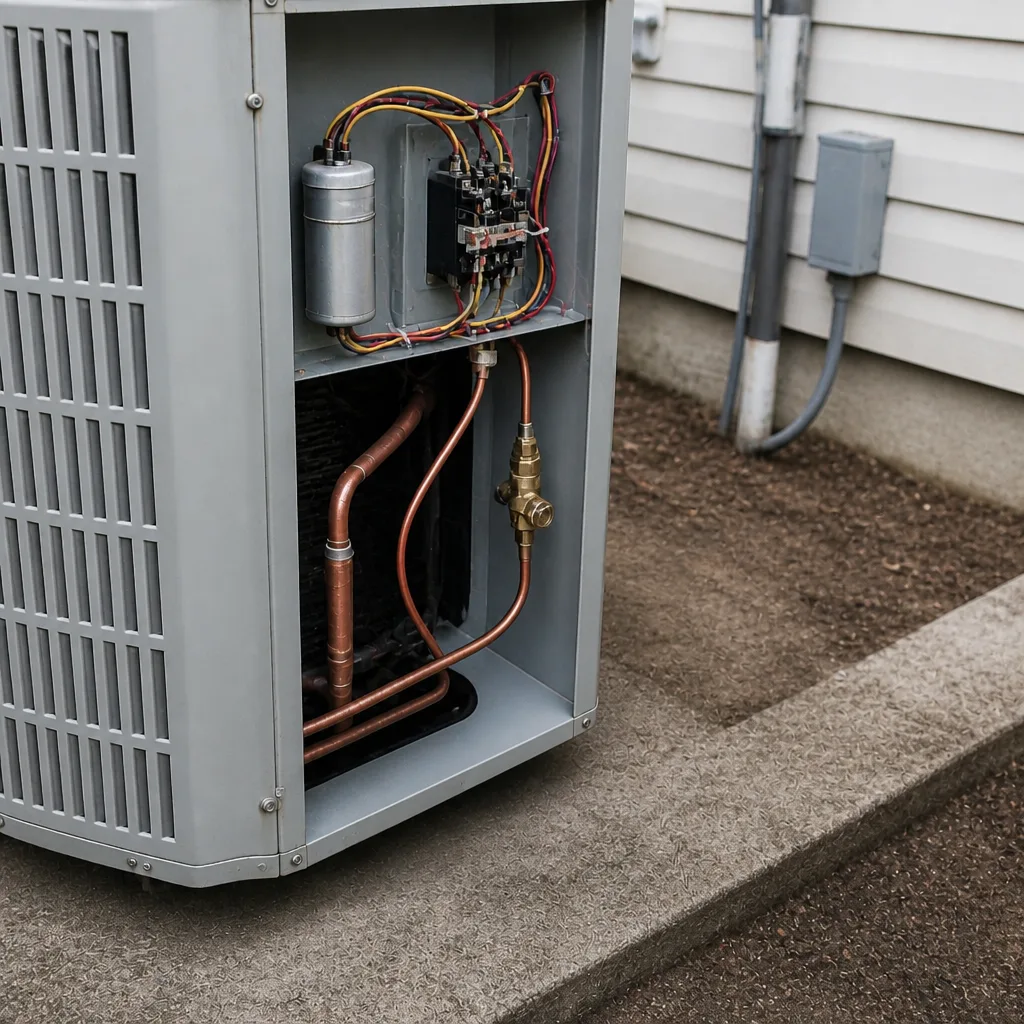 After
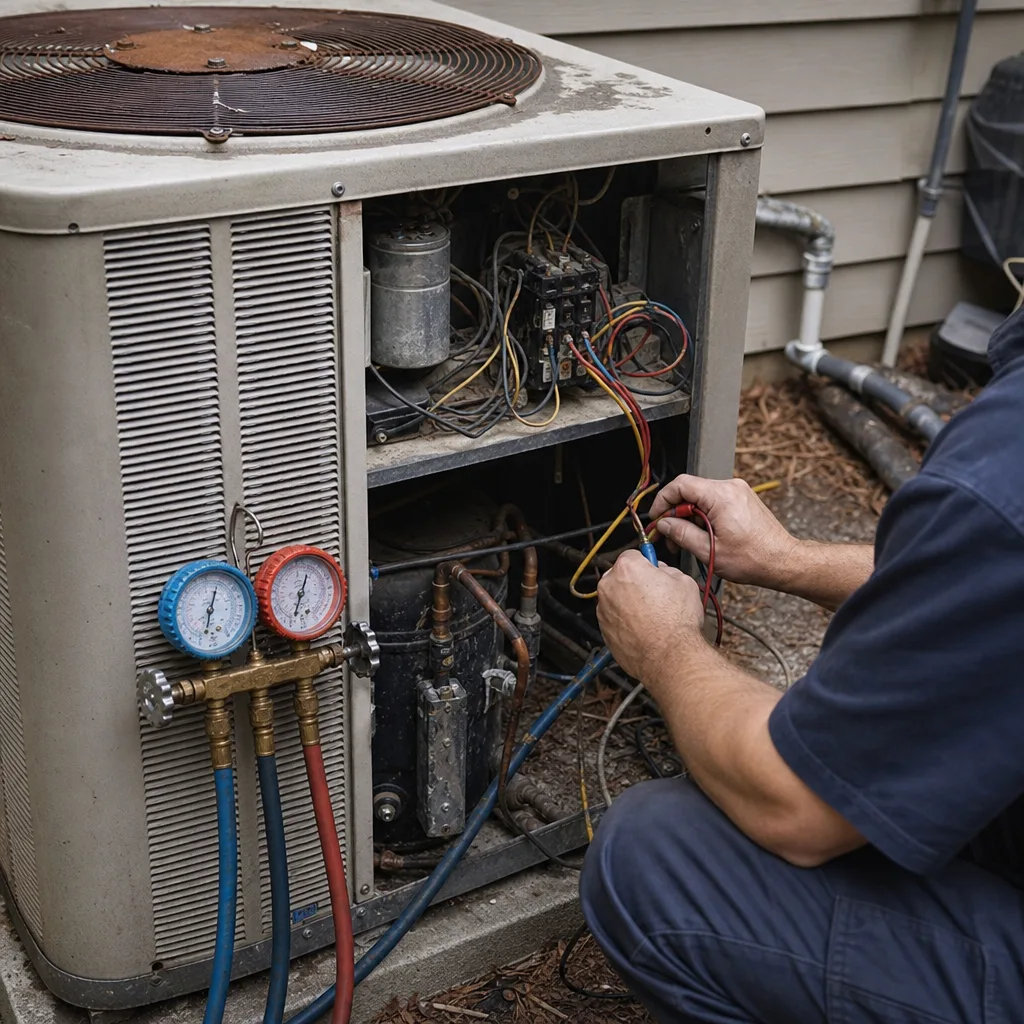 Before
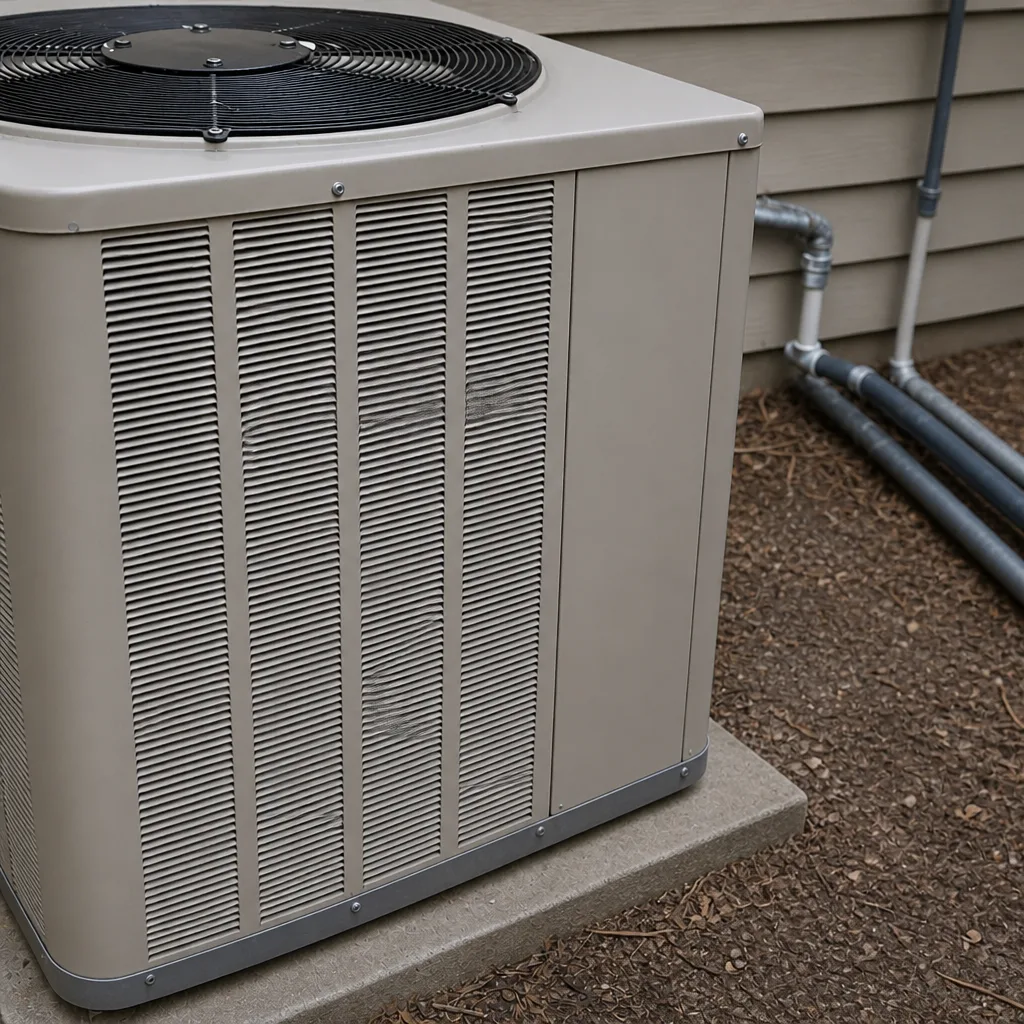 After
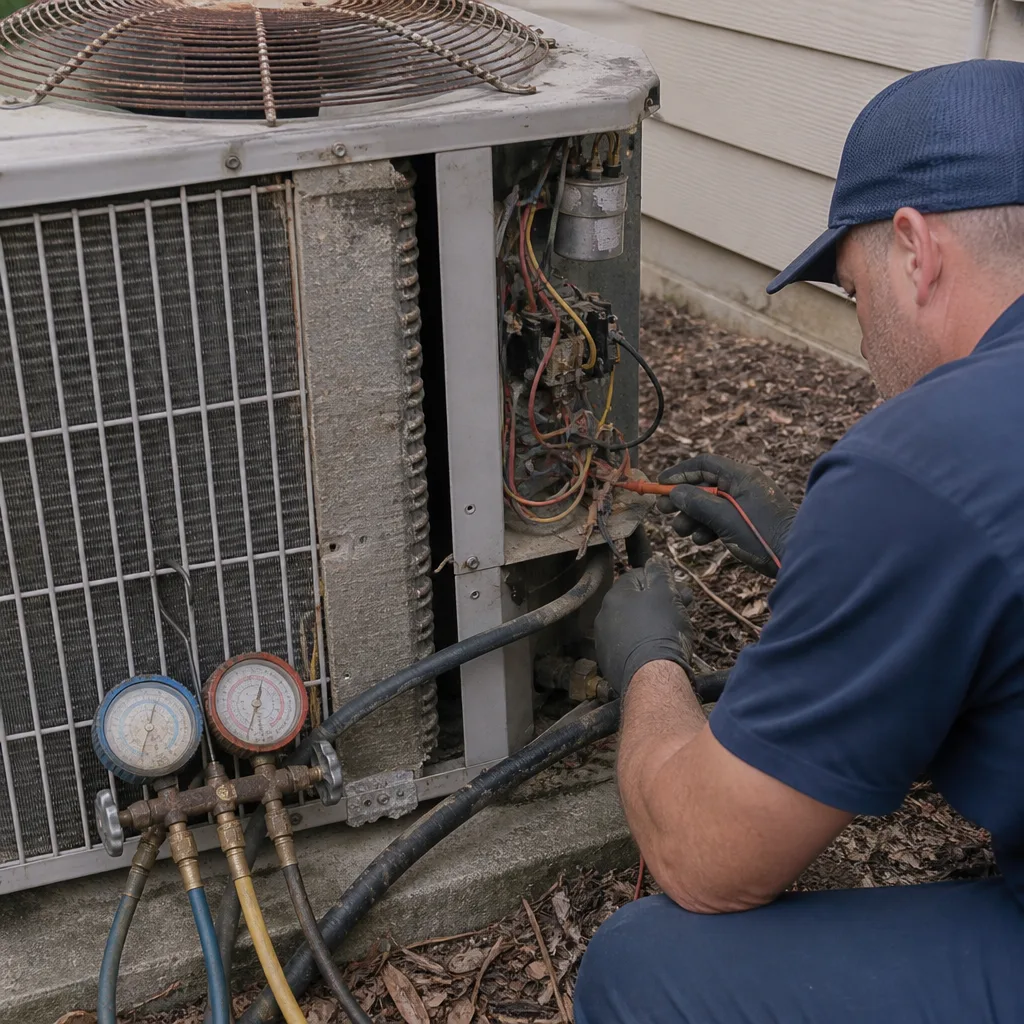 Before
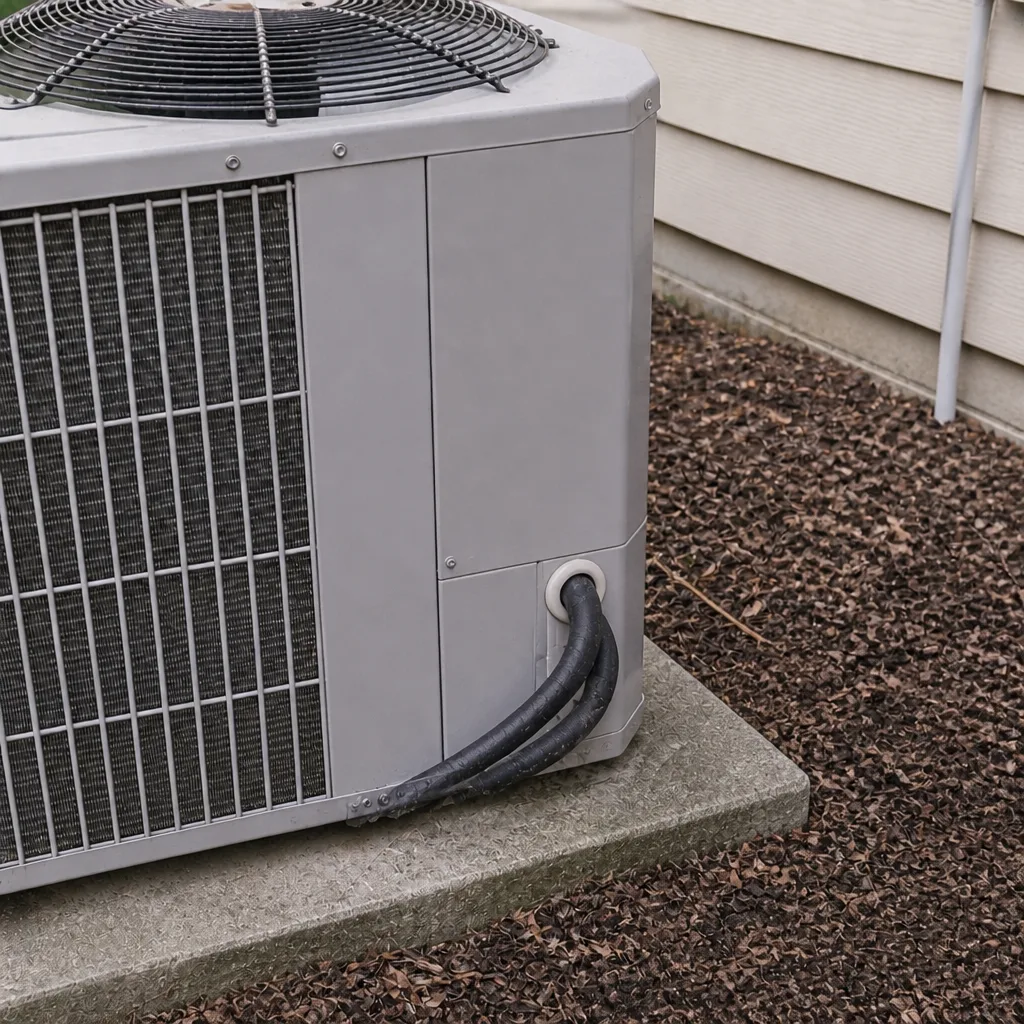 After
Common Mistakes to Avoid
- Treating the national average as your number. A repair guide that quotes a broad national range misses The Woodlands’ labor market and equipment density. The 2026 ranges in this guide are closer, but the written estimate is what applies to your job.
- Relying on the calendar instead of runtime. A ten-year-old system that runs eight months a year in The Woodlands has more hours than a fifteen-year-old system in a mild climate. Judge health by repair history and operating hours, not by the sticker year.
- Choosing the cheapest quote on a compressor job. A compressor replacement with no recharge, no filter-drier, and no warranty isn’t a compressor replacement. It’s a compressor swap that fails inside a year.
- Filling refrigerant without finding the leak. A recharge that isn’t paired with a leak repair will recur, and repeated recharges cost more than the original fix.
- Forgetting to ask about permits on a replacement. Most jurisdictions require them, and unpermitted installs can complicate insurance and resale. Ask the contractor who holds it.
- Ignoring the drain line. In this humidity, a clogged drain line is one of the most common causes of water damage during cooling season. It’s a $200-$350 fix when caught, not when it backs up into the ceiling.
- Assuming a higher-efficiency system always pays back. It usually does in The Woodlands because the runtime is high, but the payback math depends on the SEER jump and years remaining. If you’re selling in two years, that math changes. Read the The Woodlands market context for that decision.
When to Call a Professional
Some HVAC problems are homeowner-checkable: thermostat batteries, tripped breakers, clogged filters, a condensate pan that needs empties. Everything past that belongs to a technician, and in this trade the safety stakes are real. Refrigerant is a pressurized gas handled by certified technicians; capacitors hold a serious charge long after power is off; gas connections on a furnace are not a DIY project. If the air is warm, the system is short-cycling, there’s a burning smell, ice on the coil, water pooling near the air handler, or an electrical panel that’s tripping under HVAC load, that’s a call.
Wexford AC Repair offers free estimates in The Woodlands; call (866) 834-7590. We answer 24/7. Fast dispatch from 7am to 7pm, Sunday through Friday. Our technicians have up to 11 years of experience working across the nine major residential brands, and the diagnostic conversation is honest: we tell you what’s broken, what it costs to fix, and whether fixing it is the right move given your system’s history.
Frequently Asked Questions
Comparable to Houston and slightly above Dallas on average, mainly because attic and closet installs in the area’s premium housing stock take longer, and humid summer conditions slow outdoor work. The bigger driver is the system itself: variable-speed equipment and proprietary controls cost more to repair than standard equipment, regardless of city.
If the repair quote is 40% or more of a full replacement quote, and the system is eight-plus years old in The Woodlands climate, replacement is usually the smarter money. Under 30% and the system is otherwise healthy, repair is almost always right. Anything between is a judgment call on how long you plan to stay in the home. Call (866) 834-7590 for a free estimate and a written diagnosis before deciding.
Because diagnosis depth, parts tier, warranty terms, and access difficulty legitimately vary $200-$400 on the same job in this market. A quote that’s $300 cheaper may skip the filter-drier, use an aftermarket part, or warranty labor for 30 days instead of a year. Ask what’s included, not just what it costs. Call (866) 834-7590 if you want a second opinion on a written quote.
Yes. A compressor replacement should include a new filter-drier, a system evacuation and recharge, and a check of the contactor and start components. If the quote doesn’t list those, the price will look low now and high later. Ask for the full parts list in writing before you authorize the job.
No. Refrigerant is a pressurized gas that requires certification to handle and specific equipment to charge correctly, and adding gas to a system with a leak doesn’t solve the leak. Handle it the right way: get the leak found, repaired, and the system evacuated and charged by a technician. Call (866) 834-7590 for an estimate.
It can. Brands with shared platform components across their lineup usually repair faster because basic parts are local; brands with proprietary inverter boards and control modules can add two to five days to a repair. Before you buy a new system, ask the contractor about typical parts lead times for the specific model.
The Bottom Line
HVAC costs in The Woodlands are driven by three things: how hard the system works, what actually failed, and how thoroughly the quote was written. Runtime in this climate shortens the label life of equipment, which pulls the repair-vs-replace decision forward. The formula that works is straightforward: repair cost as a percentage of replacement cost, adjusted for system age in hours and efficiency. Quotes vary because parts, warranty, diagnosis, and access legitimately vary. And the costs most quotes leave out (permits, crane, haul-away, disposal) are exactly the ones to confirm before you sign. Get a written estimate, ask what’s included, and match the repair to the failure.
Written by the team at Wexford AC Repair.