
Last updated November 15, 2026
 AC repair
 Furnace & heating
 Heat pumps
 Ductless mini splits
 Carrier
 Trane
 Goodman
Seasonal tune-up and full diagnostic on your Carrier, Trane, or Goodman system - readings shown to you before any repair is proposed
Diagnosis first, numbers second - you approve the repair price before a single part goes in.
Get your free estimateHVAC Permits, Codes & Inspections in The Woodlands, TX: What You Need to Know
Here’s the part most homeowners get backwards: the HVAC contractor who tells you a job “doesn’t need a permit” isn’t saving you paperwork. They’re handing you a problem that can sit quietly for years and then surface at the worst possible moment, usually during a buyer’s home inspection or the week you file an insurance claim. In The Woodlands, the confusion runs deeper than in most places because the community sits across two counties, and two counties means two different permitting authorities with two different sets of rules. This guide walks through which authority governs your address, which HVAC jobs actually require a permit in Texas, what an inspection really checks, and what your options are if you inherit unpermitted work from a previous owner.
Quick Answer
In The Woodlands, whether you need an HVAC permit depends on your county. Addresses in Montgomery County are generally permitted through Montgomery County’s permitting office, while addresses in Harris County fall under Harris County’s rules, and both require a permit for a full system replacement or new installation. Routine service like filter changes, thermostat swaps, and most like-for-like repairs don’t require a permit, but refrigerant work and duct modifications can go either way depending on scope, so confirm with your jurisdiction before work starts. Always ask for the permit and the final inspection record; an ignored permit is far harder to fix later than a failed inspection.
Styles & brands we work with
- AC repair
- Furnace & heating
- Heat pumps
- Ductless mini splits
- Carrier
- Trane
- Goodman
Table of Contents
- Why Two Counties Matter: The Woodlands Jurisdictional Split
- Which HVAC Jobs Require a Permit in Texas
- How to Determine Which Authority Governs Your Address
- What a Texas HVAC Inspection Actually Checks
- How Unpermitted HVAC Work Affects Insurance and Resale
- What to Do If You Inherit Unpermitted Work
- How to Hire an HVAC Contractor Who Handles Permits Correctly
Why Two Counties Matter: The Woodlands Jurisdictional Split
Most people think of The Woodlands as one place, and socially it is. Legally it isn’t. The community stretches across the Montgomery County line into Harris County, and those two counties run separate permitting departments with separate forms, separate inspection schedules, and separate fee structures. A homeowner on one side of the line can follow the exact same process as a neighbor a few streets over and still end up with the wrong paperwork, because the neighbor’s address sits in the other county.
This matters because a permit issued by the wrong jurisdiction is functionally the same as no permit at all. When a title company or an insurance adjuster pulls records, they look at the authority of record for that specific parcel. If the work was permitted in Harris County but the home is in Montgomery County, the record won’t match the address, and that mismatch is a red flag.
In our experience working across the area, the split trips up homeowners most often in newer subdivisions near the southern edge of The Woodlands, where the county line runs close to established neighborhoods and the address alone doesn’t make the jurisdiction obvious. It also catches out-of-area contractors who assume “The Woodlands” means one permitting office and file with the first one they find.
- Montgomery County side: covers the majority of The Woodlands, including most of the older villages and the central core. Permits generally route through Montgomery County’s permitting process.
- Harris County side: covers the southern portion of the community. Permits route through Harris County’s process, with different forms and inspection timelines.
- Municipal utility districts and homeowner associations: these can add separate requirements on top of county permits, especially for exterior equipment placement or noise concerns. Check your HOA covenants before an installation is scheduled, not after.
The practical takeaway: never assume. Confirm the jurisdiction for your exact address before a contractor applies for anything.
Which HVAC Jobs Require a Permit in Texas
This is where the guessing should stop. Texas doesn’t license HVAC contractors at the state level the way some states do, which means permitting and code enforcement are handled locally, county by county and city by city. That local variation is exactly why the answer to “does this need a permit?” isn’t a single yes or no.
Here’s how the categories break down in practice for The Woodlands homeowners:
- Full system replacement or new installation: permit required. This includes replacing an entire outdoor condenser and indoor air handler, or installing a system in a home that didn’t have one.
- Filter changes: no permit. This is routine maintenance, full stop.
- Thermostat replacement: no permit in most cases, though a jurisdiction can require one if the work involves new wiring runs rather than a straight swap.
- Refrigerant work: it depends. Recharging an existing system typically doesn’t require a permit, but replacing a refrigerant line set, changing refrigerant type in a system not designed for it, or making repairs that alter the sealed system can trigger a permit requirement depending on your jurisdiction and the scope.
- Ductwork modifications: it depends, and this is the one that catches people. Sealing a small leak usually doesn’t require a permit; adding new duct runs, relocating supply registers, or reconfiguring a significant portion of the duct system usually does.
- Like-for-like component swaps: a straight replacement of a failed blower motor or capacitor with an identical part generally doesn’t require a permit. Changing system capacity or configuration does.
We work on equipment from nine major brands, including Goodman, Rheem, and York, and one thing we’ve learned is that the permit question doesn’t change based on the brand on the label. What changes the answer is scope. A technician who quotes a replacement and says “we don’t need a permit for that” without asking your county is guessing. A contractor who checks the address and confirms the requirement is doing the job correctly.
Why the “It Depends” Answer Is Still Useful
Homeowners hear “it depends” and assume they’re being dodged. In this case the dependency is real and knowable. The two variables that decide it are scope (how much of the system is being altered) and jurisdiction (which county’s rules apply). Once you know both, the answer becomes definite. Ask your contractor to state the permit requirement for your address in writing before work begins, so the expectation is on the record.
How to Determine Which Authority Governs Your Address
You can resolve the jurisdiction question in a handful of steps, and it’s worth doing before any work is scheduled. Here’s the sequence we recommend:
- Pull your county from your property tax statement or deed. This is the authoritative source for which county your parcel sits in, and it’s the same record a title company will use.
- Check your HOA or municipal utility district paperwork. Even with the county confirmed, an HOA may impose additional conditions on equipment placement, screening, or noise that affect how the job is planned.
- Contact the permitting office for that county directly. Ask two questions: does this scope of work require a permit, and what inspections are required before, during, and after the work.
- Ask your contractor for the permit application confirmation. A real permit produces a paper trail: an application number, a posted notice on the job site, and an inspection scheduled by the county.
- Get the final inspection record after the work is done. Keep it with your closing documents. If you ever sell, this record is what makes the work defensible.
If you’re not sure which side of the line your home sits on, that uncertainty is itself a reason to slow down before hiring. The cost of confirming is a phone call. The cost of getting it wrong can be a delayed closing. If you want help navigating the process for your specific address and equipment, our team at Wexford AC Repair can walk you through what the county will require for your job.
One more thing to keep in mind: The Woodlands’ mild winters mean most HVAC work here centers on cooling, but the permit requirement doesn’t change based on season. A heat pump replacement in January needs the same permit as an AC replacement in July.
What a Texas HVAC Inspection Actually Checks
A Texas HVAC inspection is a code-compliance review, not a performance test. The inspector isn’t grading whether the system cools well; they’re confirming that what was installed matches the permit, follows the mechanical code adopted by your jurisdiction, and is safe. Understanding what they look at helps you avoid the most common avoidable failures.
- Equipment match to the permit: model numbers, capacity, and location must match what was applied for. If a contractor swaps to a different unit without amending the permit, the inspection fails.
- Electrical connections and disconnect: the system must be wired to code with a properly rated disconnect within sight of the outdoor unit.
- Refrigerant line routing and protection: lines must be supported, insulated where required, and protected from physical damage.
- Condensate management: the drain line and any secondary drain or float switch must route correctly and discharge to an approved location.
- Duct sealing and connections: where ductwork was modified, the inspection checks that connections are mechanically fastened and sealed, and that the duct system delivers what the equipment is rated for.
- Clearances and access: the unit needs the required clearance from walls, fences, and property lines, and the indoor unit needs adequate service access.
- Combustion safety for gas furnaces: flue connections, gas piping, and venting must be correct and clear of obstructions.
A failed inspection is a scheduling problem. A technician fixes the deficiency, the county re-inspects, and the permit clears. An ignored permit is a records problem, and records problems are harder to solve because there’s often no application to correct. That distinction matters enormously when you’re selling a home or filing a claim.
We’ve seen failing inspections turn on surprisingly small items: a missed secondary drain pan, a line set run without adequate support, a disconnect that didn’t meet clearance. These aren’t signs of a dishonest contractor, they’re signs of a contractor who didn’t plan the inspection. When your permit clears, you have documentation that the work was done to code. That’s the practical value.
How Unpermitted HVAC Work Affects Insurance and Resale
This is the consequence homeowners underestimate. Unpermitted HVAC work doesn’t just sit in a file; it follows the house. When you file a claim tied to the system (a water damage event from a condensate failure, an electrical fire at the disconnect, storm damage to the outdoor unit), the adjuster reviewing the claim will look at the installation records. If the work was never permitted, the insurer can question whether the covered loss is tied to non-compliant work, and that question can complicate, delay, or reduce the claim.
On the resale side, Texas property disclosure rules require sellers to disclose known defects and material facts about the property. If you know an installation was unpermitted, that’s information a buyer’s inspector will likely surface anyway, and surfacing it yourself is far better than having it discovered mid-negotiation. Buyers use unpermitted work as leverage. Some walk away. Most renegotiate.
Two things we recommend to every homeowner in The Woodlands:
- Keep the permit and final inspection record. Store it with your deed, survey, and warranty paperwork. It’s part of your home’s history and it’s the first thing a buyer’s agent will ask about if the system looks new.
- If you’re about to sell and you’re not sure the work was permitted, find out now. Request the permit history from the county before you list. Discovering a gap weeks before closing is far more expensive than discovering it months earlier.
Insurance and title are where the paper trail earns its keep. A permit that was pulled and closed is a fact. A permit that was never pulled is an unknown, and unknowns cost money at the closing table.
What to Do If You Inherit Unpermitted Work
If you’ve bought a home in The Woodlands and you’re discovering that an earlier installation or modification was never permitted, you’re not stuck. Your legal position depends on what the work was, when it was done, and whether the current installation meets code. Here’s the practical order of operations:
- Request the permit history from your county. Confirm what was permitted and what wasn’t. Sometimes the work was permitted but the record wasn’t kept by the prior owner; a closed permit still exists in the county file.
- Get a professional assessment of the current installation. A licensed technician can tell you whether the system was installed to code, regardless of whether a permit was pulled. Compliance and paperwork are two separate questions.
- Contact your county about retroactive permitting. Many jurisdictions allow a permit to be pulled after the fact for existing work, sometimes with a late fee and a full inspection. Ask what your county’s process is and what the inspector will require.
- Fix any code deficiencies the inspection reveals. Small corrections often clear the inspection; larger ones may need to be addressed before the permit closes.
- Disclose the situation in writing when you sell. If you remediated the work and closed the permit, you’re in good shape. If you didn’t, disclose the gap and provide whatever records you have.
What you cannot do is ignore it and hope the paperwork never surfaces. Sooner or later, a buyer’s inspection, an insurance claim, or a county record will ask the question, and it’s much easier to answer when you’ve already dealt with it. Our team handles AC installation and repair across The Woodlands and can assess the installation and tell you honestly whether the system you have is compliant, so you’re deciding based on facts rather than fear.
Should You Pull a Retroactive Permit or Leave It Alone?
If you’re staying in the home for the long term and no claim is pending, the urgency is lower. If you’re planning to sell within a few years, or if you have any reason to expect a claim tied to the HVAC system, pull the permit and close it out. The cost of retroactive compliance is almost always smaller than the negotiating leverage a buyer will apply when they find the gap.
How to Hire an HVAC Contractor Who Handles Permits Correctly
The simplest signal of a contractor who handles permits correctly is that they raise the subject before you do. A professional asks for your address, checks the jurisdiction, and states whether a permit is required before quoting the job. That’s the standard we hold ourselves to, and it’s the standard you should hold any contractor to in The Woodlands.
A few questions worth asking before you sign:
- Will this job require a permit in my county, and who pulls it: your company or me?
- What inspections are required, and will you schedule them and provide the final record?
- If something fails inspection, who pays for the correction and the re-inspection?
- Do you handle HOA or MUD requirements in addition to the county permit?
- If the equipment needed differs from what was quoted, will you amend the permit before installation?
We work on Carrier, Trane, Lennox, Daikin, Bryant, American Standard, Goodman, Rheem, and York equipment, and our technicians have up to 11 years of experience across those systems. That breadth matters for permitting because a permit has to match the equipment installed. A contractor who only knows one brand tends to quote what they stock; a brand-neutral contractor can match the system to your home and amend the permit if the plan changes. Our AC repair and installation work follows the same permit check for both cooling and heating; the process doesn’t change based on which side of the system you’re servicing.
When a Permit Is Not Required, Get That in Writing
Sometimes the answer really is no. A thermostat swap, a filter change, a capacitor replacement, a repair of a failed part with an identical part – those don’t need a permit in most The Woodlands jurisdictions. Even then, ask the contractor to note the scope on the invoice. If a scope question ever comes up later, a written scope protects you. It’s a two-minute step that costs nothing and closes a door.
Common Mistakes to Avoid
- Assuming The Woodlands is one jurisdiction. The Montgomery County / Harris County split means a permit that works for one address doesn’t necessarily clear for another. Confirm your county before the contractor applies.
- Taking “no permit needed” at face value from a contractor. Ask them to state it in writing, tied to your address. A contractor who says it verbally won’t be the one answering the title company’s questions later.
- Skipping the final inspection because the work looks fine. The inspection is your proof the work was done to code. A system can run perfectly and still fail the code review; the record is the point.
- Discarding the permit and inspection documentation. Keep it with your closing documents. When you sell, the buyer’s inspector will ask, and having the records ready turns a negotiation risk into a non-issue.
- Letting an HOA or MUD requirement go unaddressed while the county permit is pulled. Both processes run on different timelines. Start them together so the installation isn’t waiting on paperwork.
- Filing an insurance claim on a system with an unpermitted installation without talking to the insurer first. A pre-claim conversation about the installation record is far better than discovering the gap during claim review.
- Ignoring inherited unpermitted work until closing. Retroactive permits are usually straightforward; discovering the gap weeks before a closing date rarely is. Address it while you have time.
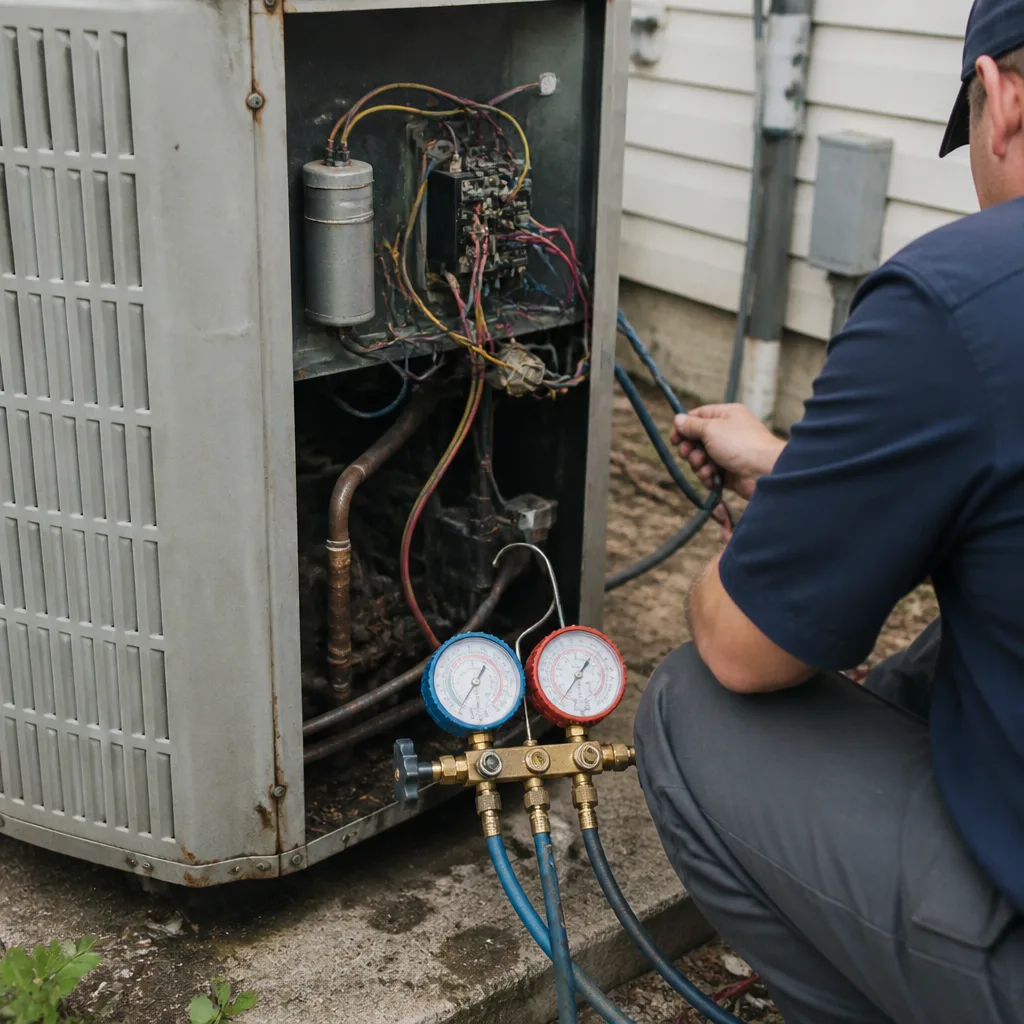
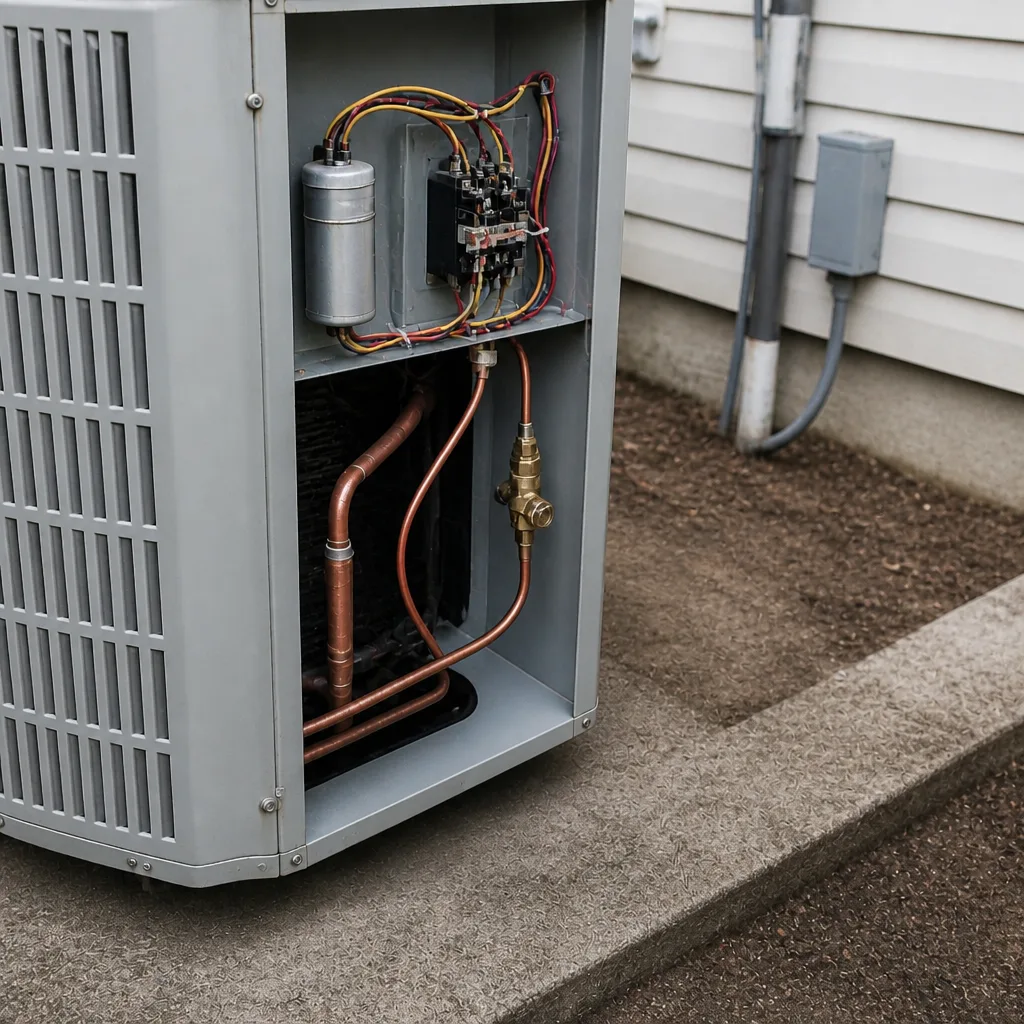
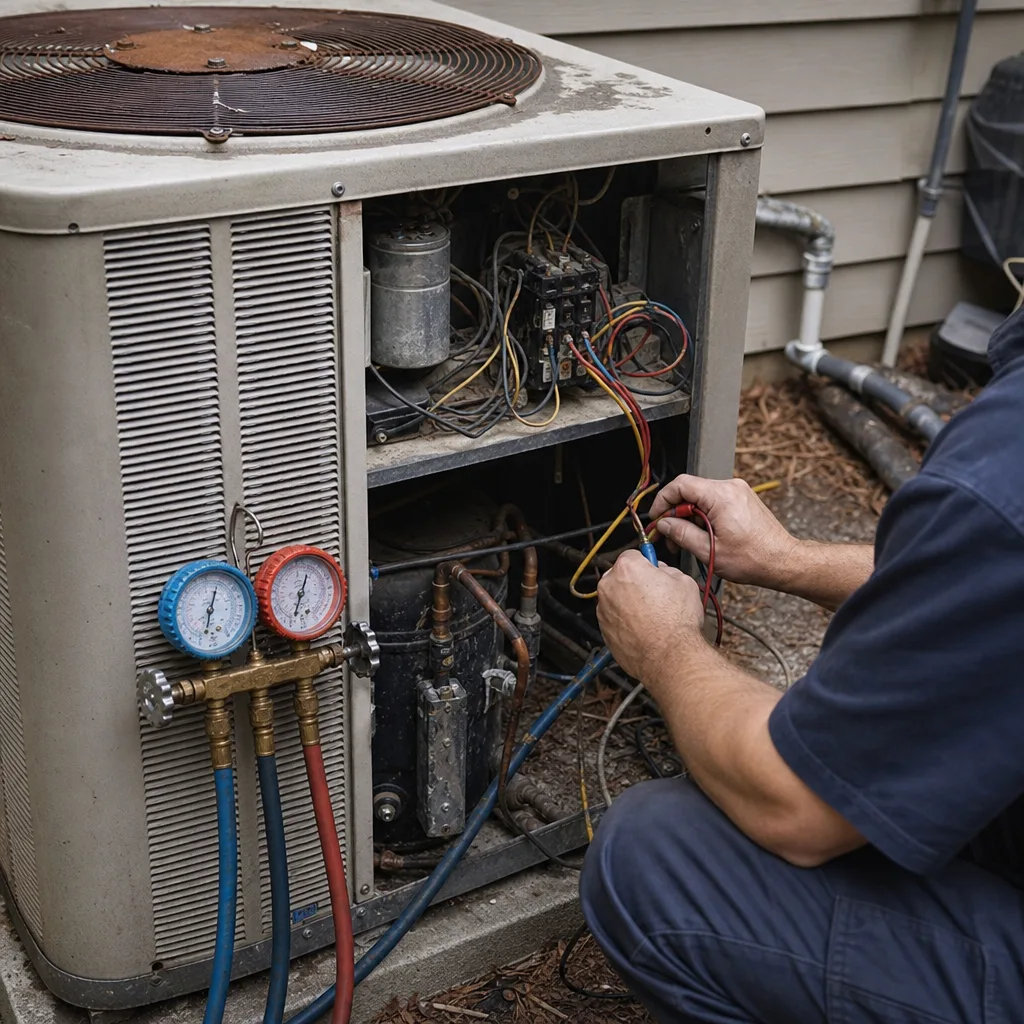
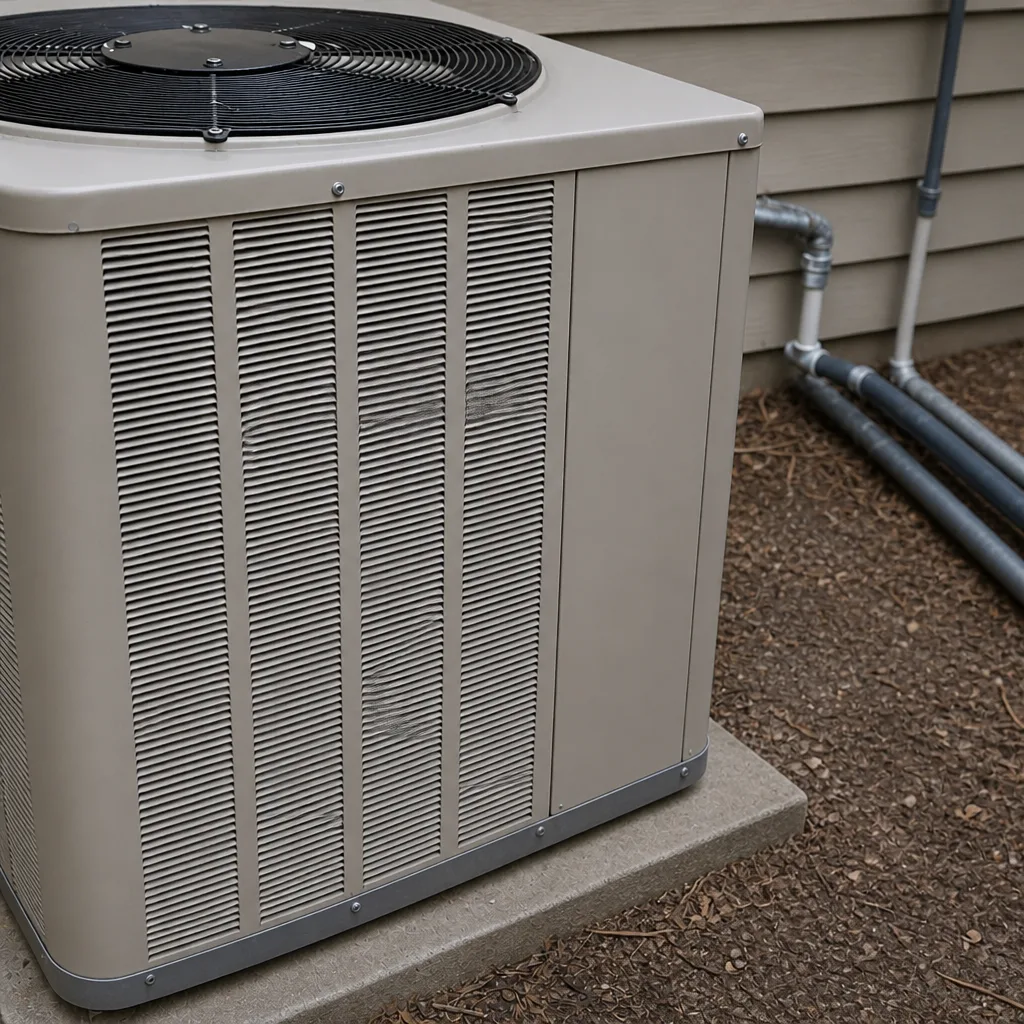
See the difference
 Before
 After
 Before
 After
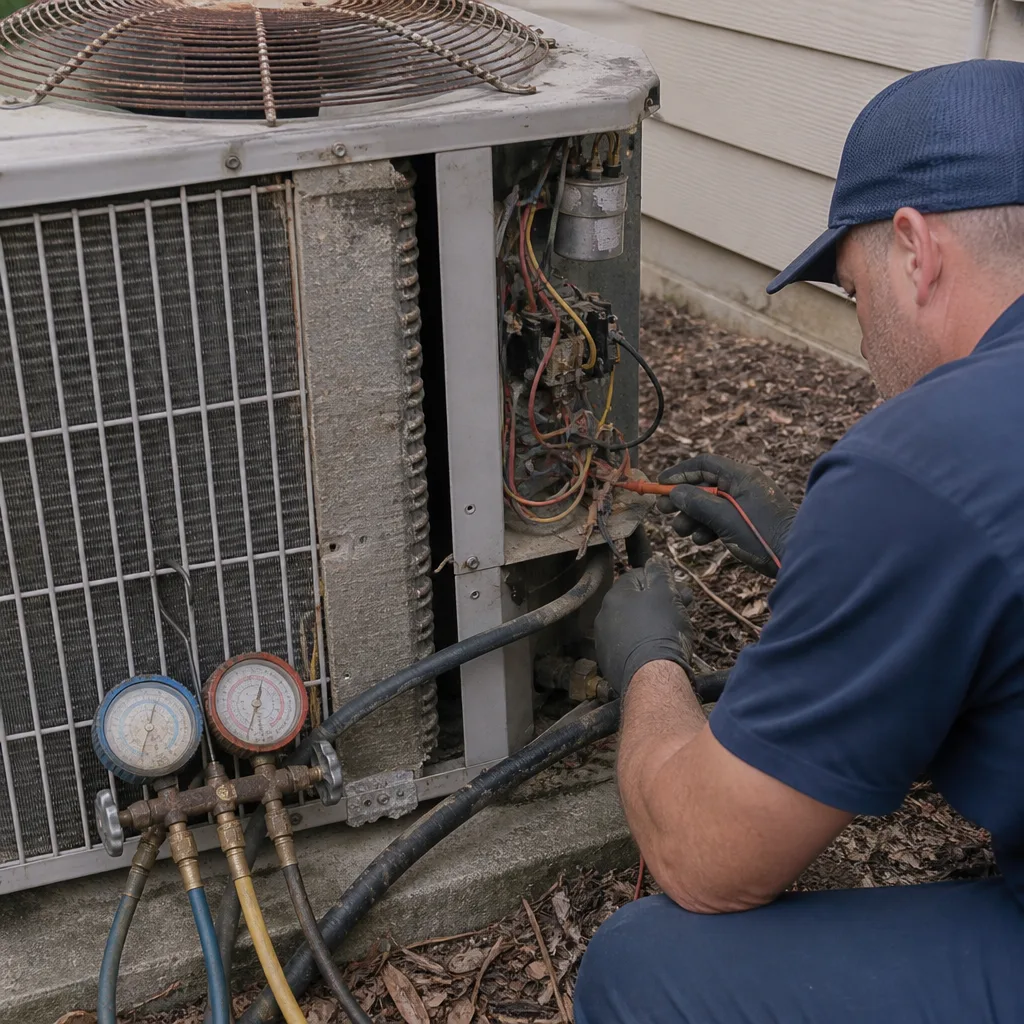 Before
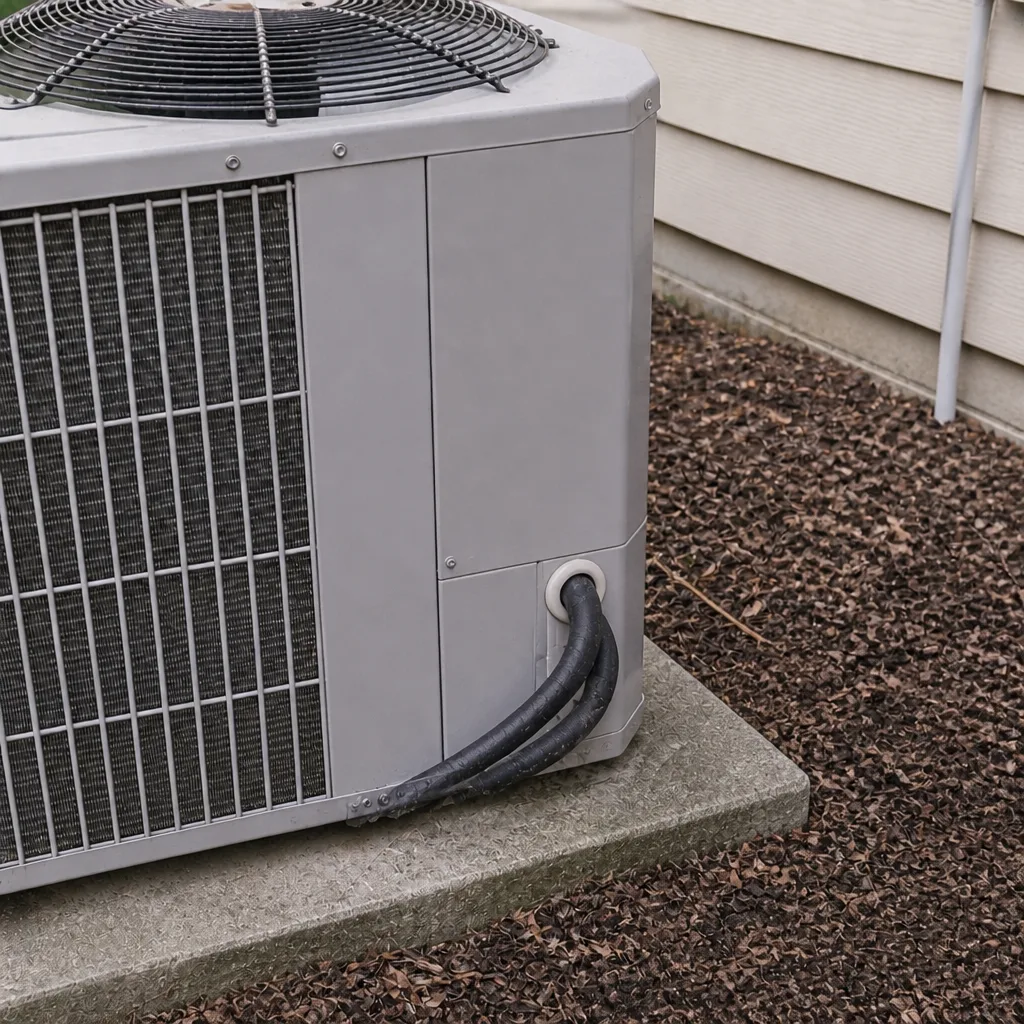 After
When to Call a Professional
Some permit questions you can answer yourself with a phone call to the county. Others need a technician who has done the job and knows what the inspector will look for. Call a professional if a contractor has told you the work doesn’t need a permit and you’re not certain, if you’re replacing an entire system and want the permit and inspection handled end to end, if you’ve inherited unpermitted work and need an honest assessment of the installation, if an insurer or title company has raised a question about the system’s records, or if the installation simply looks questionable – equipment mismatched, work not supported, lines routed poorly. Wexford AC Repair offers free estimates in The Woodlands – call (866) 834-7590. We answer 24/7. Fast dispatch from 7am to 7pm, Sunday through Friday.
Frequently Asked Questions
Yes, a full system replacement generally requires a permit in The Woodlands, and which county issues it depends on your address. Confirm the jurisdiction with your county permitting office before work begins, and make sure the permit matches the equipment being installed so the final inspection clears without a change order.
It depends on where your parcel sits. Most of The Woodlands falls in Montgomery County, but the southern portion falls in Harris County. Pull your deed or tax statement to confirm your county, then contact that county’s permitting office directly. A permit issued by the wrong jurisdiction is treated the same as no permit.
It depends on scope. Recharging an existing sealed system or sealing a small duct leak typically doesn’t require a permit, but replacing a line set, changing refrigerant type in a system not designed for it, adding new duct runs, or relocating registers usually does. Ask your county to clarify the requirement for your specific job before work starts.
You can usually fix it. Request the permit history from your county, have a technician assess whether the installation meets code, then ask the county about retroactive permitting. Most jurisdictions allow a permit to be pulled after the fact with a full inspection, and closing the record protects you at resale and during any future insurance claim.
It can. If a claim involves the HVAC system, the insurer may review the installation records and question whether the covered loss is tied to non-compliant work. That review can complicate or delay a claim. If you’re unsure whether your system was permitted, find out before you need to file, not after.
It checks code compliance, not cooling performance. The inspector verifies the equipment matches the permit, that electrical connections and disconnect are correct, that refrigerant lines and condensate drains route properly, that ducts are sealed and supported where modified, and that clearances and gas venting (for furnaces) meet code. A failed inspection is a scheduling fix; an ignored permit is a records problem.
The Bottom Line
Permits in The Woodlands come down to three facts. First, your address determines whether Montgomery County or Harris County governs, and the wrong-jurisdiction permit is worth nothing. Second, full replacements and new installations require a permit; routine service and most like-for-like repairs don’t; refrigerant work and duct modifications depend on scope. Third, the records matter as much as the work: keep the permit and the final inspection, communicate with your insurer if the system’s history is uncertain, and if you inherit unpermitted work, address it through retroactive permitting before you list or file a claim. If any of that feels murky for your specific address, get a technician who checks the county before quoting the job.
When the permit question is settled and the work is ready to schedule, call Wexford AC Repair at (866) 834-7590 for a free estimate. We answer 24/7. Fast dispatch from 7am to 7pm, Sunday through Friday. Our technicians have up to 11 years of experience working on Carrier, Trane, Lennox, Goodman, Rheem, York, Daikin, Bryant, and American Standard systems, and we handle the permit check for both AC repair and AC installation in The Woodlands before any work begins. If you need a straight answer on what the county will require, we’re ready to give you one.
Written by the team at Wexford AC Repair.